
Tokenised financial markets only scale when settlement is trusted, fast, and interoperable. In Europe, the European Central Bank has argued that without tokenised central bank money, sellers of tokenised securities may be paid in an asset they are not comfortable holding, such as one exposed to price volatility or credit risk. That friction can limit market growth and cross-border integration. This is the context for the 2026 focus on building rails that connect tokenised assets to robust settlement, and it frames why central banks and regulators are prioritising common standards and practical settlement connectivity.
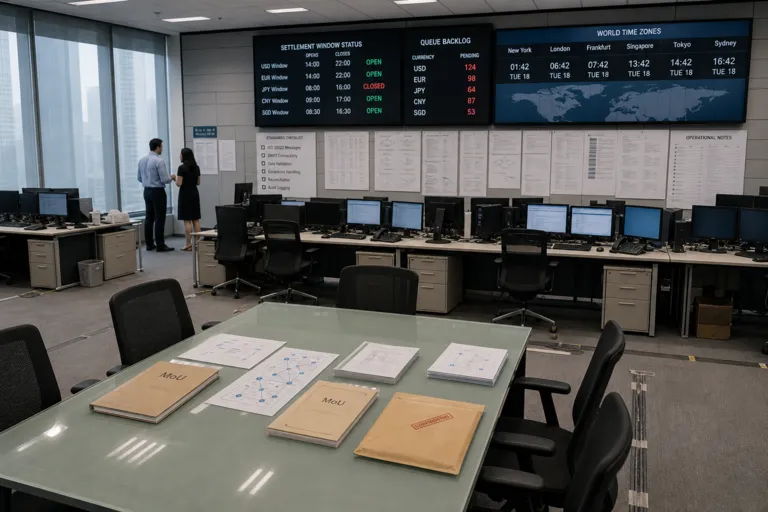
Singapore’s Monetary Authority of Singapore and Germany’s Deutsche Bundesbank set out a concrete bilateral track in a Memorandum of Understanding signed in November 2025, on the sidelines of the Singapore FinTech Festival. Under the MoU, the two central banks agreed to collaborate on technological and financial innovation. The stated goals include fostering new settlement solutions that reduce the costs and processing times of cross-border transfers between Singapore and Germany, and promoting common standards for cross-border payments, foreign exchange, and securities flows involving tokenised assets, to enhance interoperability between digital asset platforms. This work also builds on MAS’ Project Guardian, launched in May 2022, with the Bundesbank joining the Guardian Policymaker Group in November 2024.
Why Standards and Central Bank Settlement Matter
The push for common standards sits alongside Europe’s own blueprint for tokenised markets. The ECB’s work on “Appia” is organised around six building blocks, ranging from technical standards and interoperability to collateral management, cross-border connectivity, and legal and regulatory foundations. The ECB also described how analysis and operational lessons can feed between initiatives on a staggered basis, with one project eventually evolving into a core component of the broader ecosystem. For market participants, this emphasis reinforces a simple message: tokenised assets are not only a technology question. They also require payment and settlement rails that keep pace with new issuance and trading models.
Early market activity and testing provide additional context for the settlement challenge. The Association for Financial Markets in Europe has estimated that European issuers have placed close to €4 billion in fixed-income instruments based on distributed ledger technology since 2021, including the first digital sovereign debt issuances by EU Member States. This also sits alongside the Eurosystem’s 2024 exploratory work, where participants across nine jurisdictions conducted transactions worth roughly €1.6 billion. The ECB noted that these included trials involving real settlements in central bank money and experiments that tested new use cases through mock transactions. Those figures underscore why tokenised settlement design is becoming a practical priority, not just a concept.
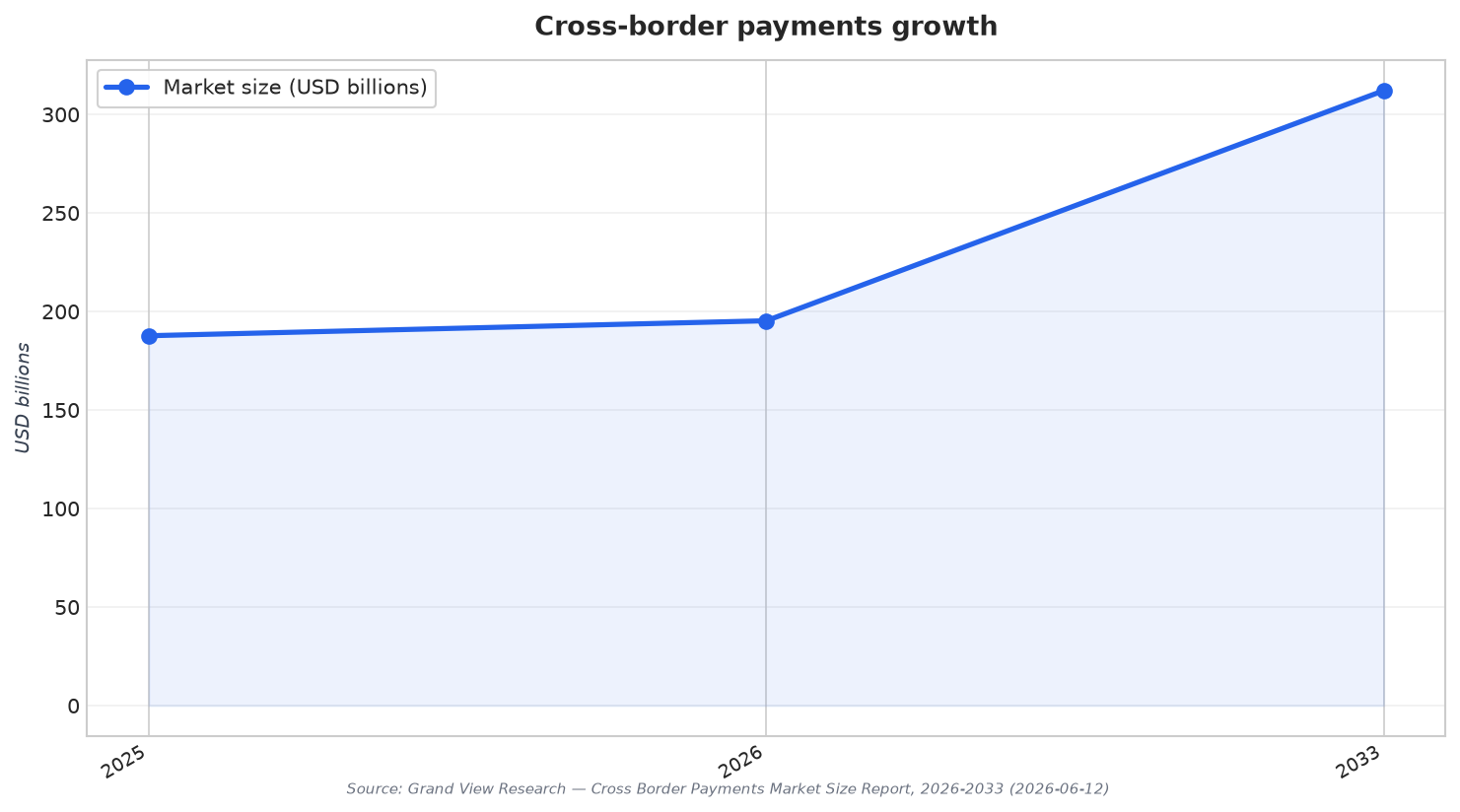
Broader cross-border payments modernisation is moving in parallel with tokenisation efforts. A market report by Grand View Research sized the cross-border payments market at $187.7 billion in 2025, projecting growth from $195.3 billion in 2026 to $312.1 billion by 2033, at a CAGR of 7.1%. The same report noted that Germany is adopting real-time cross-border payment solutions and that the Bundesbank has been participating in initiatives to modernise payment infrastructures, focusing on speed and reliability. It also cited the Federal Reserve noting that over 90% of central banks are researching CBDCs, with pilots underway in many jurisdictions. Against that backdrop, the Singapore MAS and Deutsche Bundesbank tokenisation work in 2026 is best read as one piece of a larger global effort to reduce frictions in international settlement.
What did MAS and the Deutsche Bundesbank agree to do under their MoU?
How does Project Guardian connect to the MAS-Bundesbank partnership?
What tokenisation activity has been cited in Europe so far?
How does the Singapore MAS–Deutsche Bundesbank tokenisation agenda in 2026 relate to cross-border payments trends?