
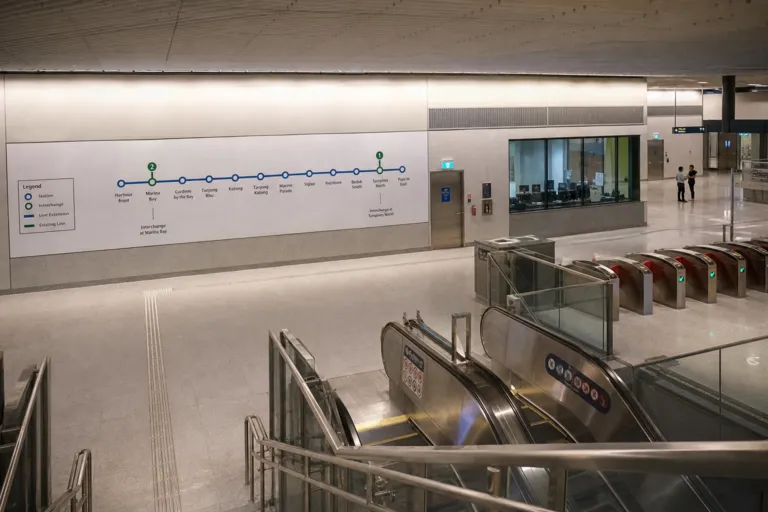
Cross Island Line Phase 3 (CRL3) has a clear mission in the West. It extends the Cross Island Line westwards from CR19 station in Jurong Lake District to CR23 station at Gul Circle. In doing so, it is positioned to enhance rail connectivity in Singapore’s western region and cut travel times for residents and workers who currently rely on less direct options. The alignment and station locations were announced by the Land Transport Authority (LTA) and Singapore Land Authority (SLA), framing CRL3 as a practical connector between Jurong Lake District and the industrial belt nearer to Gul Circle.
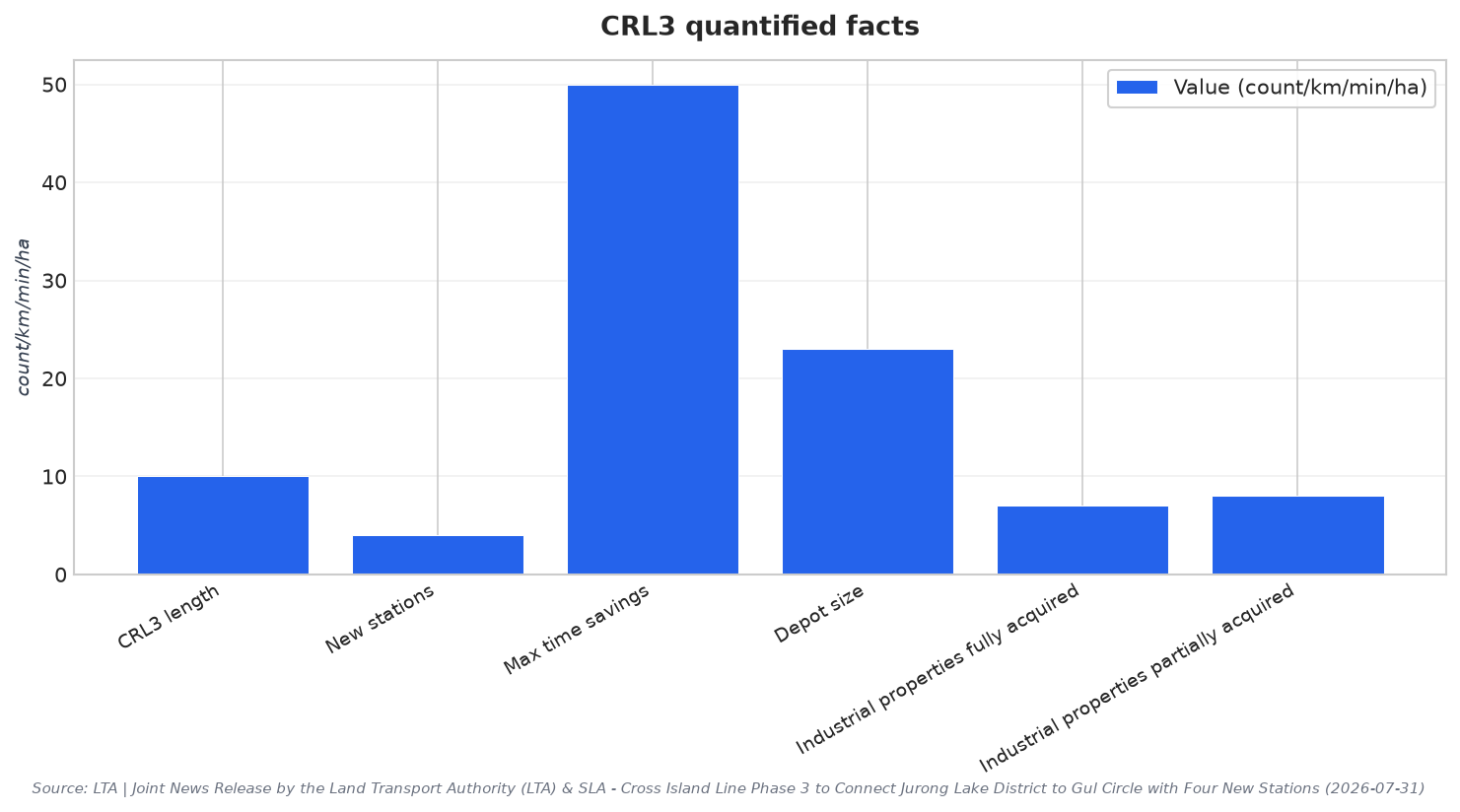
At project level, CRL3 is approximately 10 km long and comprises four fully underground stations: CR20, CR21, CR22, and CR23. Two of these are interchanges, which is central to how the extension is meant to work. CR21 connects commuters to the Jurong Region Line at JS12 station, while CR23 connects to the East-West Line at the existing Gul Circle station. For commuters travelling to and from the western parts of Singapore using the Cross Island Line, LTA has stated that time savings can be up to 50 minutes when CRL3 is completed.
Where the Four Stations Sit—and Why It Matters
The station siting shows how CRL3 is planned to serve both homes and heavy industry. CR20 is sited at Jalan Terusan beside the Ayer Rajah Expressway, serving Jurong Lake Gardens and residential estates at the south end of Taman Jurong, including Yung Ho Spring and Taman Jurong Skyline. CR21, located along Jalan Buroh, serves as a gateway to Jurong Island via the nearby Jurong Island Checkpoint, and it is the interchange with the Jurong Region Line at JS12. CR22 sits at the eastern end of Gul Circle near the junction with Gul Way, serving existing and future developments in the Benoi and Gul areas.
CR23 is the interchange at Gul Circle, linking to the East-West Line and supporting access to existing and future industrial areas. That “last stop” matters because it anchors the western section into an established line, turning the CRL3 stretch into more than a local shuttle. It also strengthens the wider rail expansion picture. Together with other ongoing rail expansion projects, CRL3 is expected to expand Singapore’s rail network to more than 360 km. This broader build-out is also tied to the full Cross Island Line vision, described as Singapore’s eighth and longest fully underground MRT line at around 67 km when completed.
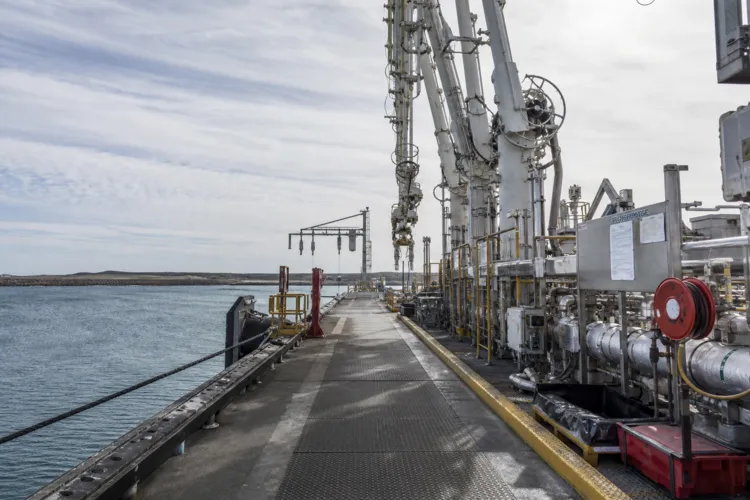
Delivering this westward connection also requires enabling infrastructure and land actions. As part of CRL3, a second CRL rail depot of approximately 23 hectares will be constructed at the former Raffles Country Club site, providing maintenance facilities and stabling for the CRL train fleet. It will be co-located with a multi-storey bus depot that provides parking, charging, and maintenance facilities for public buses. Construction works for CRL3 are expected to commence in 2027, with the stations targeted to open by the late 2030s, alongside noise and vibration impact studies and mitigation measures. To facilitate CRL3 and related road works, seven industrial properties will be acquired, and eight will be partially acquired, largely affecting ancillary features such as green verges and boundary fences—an important detail for businesses tracking Singapore Cross Island Line Phase 3 stations near Gul.
How long is Cross Island Line Phase 3, and how many stations will it add?
Which CRL3 stations will be interchanges, and what do they connect to?
How much travel time could CRL3 save for commuters using the line in the West?
What is being built to support operations for CRL3 besides stations?
What should readers know about the Singapore Cross Island Line Phase 3 stations around Gul Circle?