
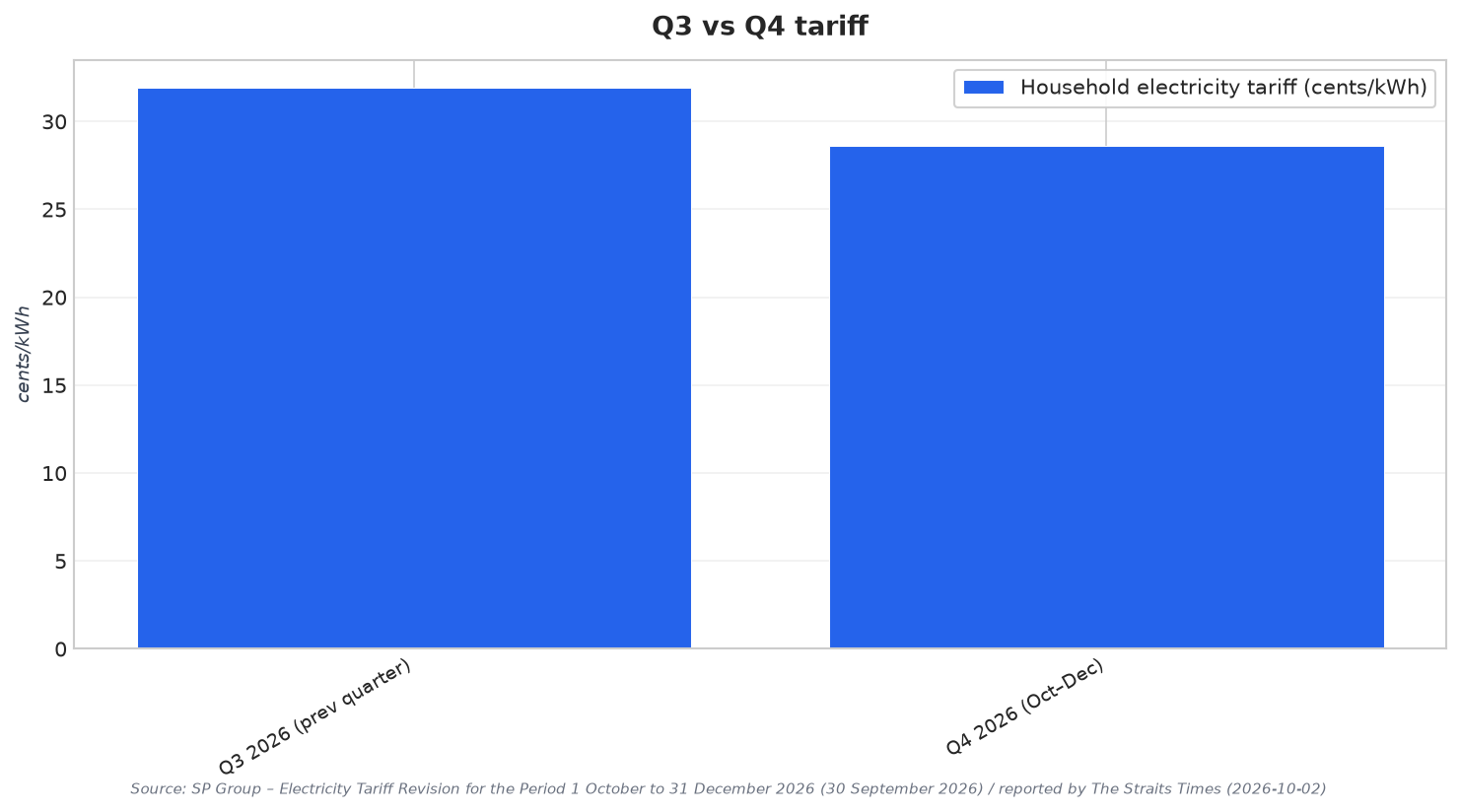
Singapore households are set for a meaningful break in power costs in the last quarter of 2026. From Oct 1 to Dec 31, the household electricity tariff (before GST) will fall by 10.4% to 28.59 cents per kilowatt-hour (kWh), down from 31.91 cents per kWh in the previous quarter. SP Group, Singapore’s grid operator, said the change is driven by lower energy costs. For many families, the effect is immediate: SP Group estimated that the average monthly electricity bill for households living in Housing Board four-room flats will decrease by $12.99 before GST.
The reduction is not limited to households. SP Group said the overall electricity tariff before GST, including tariffs for non-households, will decrease by an average of 10.6% or 3.32 cents per kWh compared with the previous quarter. Alongside electricity, piped town gas is also getting cheaper. City Energy said the gas tariff for households will decrease by 8.6%, from 23.48 cents per kWh previously to 21.45 cents per kWh for the same Oct-to-Dec period, citing lower fuel costs than in the prior quarter. Together, these adjustments point to a broad easing in energy-related charges entering year-end.
What’s Driving the Q4 2026 Cut: Fuel Prices and How Tariffs Are Set
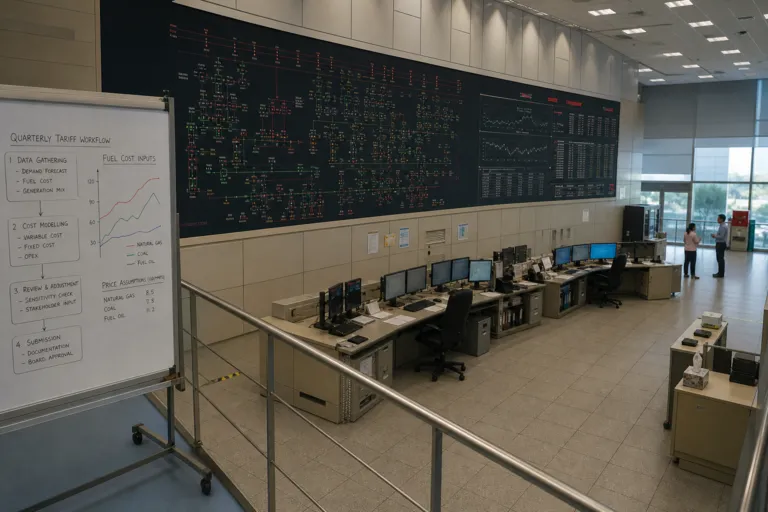
Understanding the Singapore electricity tariff Q4 2026 revision starts with how the regulated tariff is calculated. SP Group reviews electricity tariffs every quarter based on guidelines set by the Energy Market Authority (EMA). The energy cost component is set using the average natural gas prices in the first two and a half months of the preceding quarter. SP Group said the Q4 2026 energy cost component reflects natural gas prices that were lower from July 1, 2026 to Sept 15, 2026, in tandem with lower global fuel prices. This structure also explains why tariffs can shift from quarter to quarter as fuel markets move.
Market observers also linked the drop to oil price movements during the relevant period. Rystad Energy senior consultant David Chew said “July and August saw much lower oil prices versus the previous quarter” and described the decline as “some welcome good news for Singaporeans.” KPMG partner Sharad Somani said the Q4 adjustment “was largely expected” given the softening of Brent crude oil prices over the last three months, adding that it shows how global energy market dynamics flow through Singapore’s regulatory regime. Still, both SP Group and analysts flagged that higher global fuel prices since September 2026—amid escalating Middle East tensions—could affect the subsequent quarter if the situation persists.
The shifting environment is also influencing how households buy electricity. Since the outbreak of the Iran war, more households have moved to fixed-price plans that lock in rates for the contract period. The proportion of households on fixed-price plans rose from around 36.6% on Feb 1 to 38.4% on Sept 1, while the share purchasing from SP Group under the regulated tariff fell from 63.4% to 61.6% over the same period. In other words, even as the regulated tariff drops for Q4 2026, a growing slice of households is actively managing volatility by choosing contract-based pricing.
What is the household electricity tariff in Singapore for Q4 2026?
How much could a four-room HDB household save on electricity in Q4 2026?
Why are electricity tariffs falling in Q4 2026?
How is Singapore’s regulated electricity tariff calculated each quarter?
Will the Singapore electricity tariff in Q4 2026 stay low into 2027?