
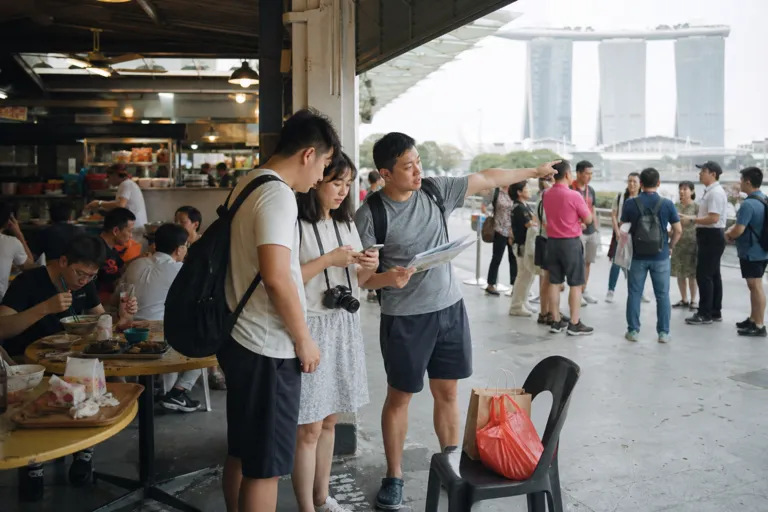
Singapore is seeing Chinese visitors come back in force, but their spending is evolving. Industry players told CNA that large tour groups on chartered buses are giving way to smaller groups who prefer “free and easy” options. This shift shows up on the ground in retail. Nee Vintage, a luxury pre-loved label, said Chinese visitors used to account for about 70% of sales before 2022, but now contribute around 30%. The change is not just about where people shop. It is also about what they want from the trip, as more visitors seek out “unique aspects of Singapore” rather than focusing only on luxury items.
Arrivals data underlines why the market matters for Singapore. Travel And Tour World reported that from January to August 2025, Singapore had 11.6 million international arrivals, up 2.7% from the same period in 2024. China was the largest source market in that period with approximately 2.3 million arrivals. CNA also reported that China overtook Indonesia as Singapore’s top source of visitors, with about 2.9 million tourists in the first 11 months of last year, compared with 3.35 million over the same period in 2019. Even before full volume recovery, the pattern of travel is changing in a way that affects how tourism and retail businesses plan products, staffing, and on-the-ground experiences.
Why Experience-Led Trips Are Replacing the Old Shopping Playbook
One reason the “bags to bucket lists” story resonates is that Chinese outbound travel preferences are shifting broadly, not only in Singapore. Future Market Insights says the China outbound travel market is entering a phase where “traveler independence, digital booking sophistication, and experiential travel preferences replace the group-tour, shopping-focused model” that dominated pre-pandemic. CKGSB quoted China Trading Desk estimating 145.9 million outbound trips in 2024, with expectations to reach parity with 2019’s 155 million trips this year, and growth predicted to continue past 200 million by 2028. Skift also highlighted spontaneity, noting 74% of travelers book trips less than a month in advance. These dynamics encourage shorter planning cycles, more self-built itineraries, and spend directed toward activities and discovery.
Singapore stands to benefit because it matches what many travelers now say they want. CKGSB reported that Singapore tops the list of preferred destinations for Chinese tourists, with 17% of travelers stating they would like to visit the city-state. CNA provided a concrete signal of changing trip structure: Chinese visitors stayed longer on average last year, at 3.8 days compared with 3.04 days in 2019. Longer stays create more room in the budget for paid attractions, dining, and curated neighborhood exploration. At the same time, safety perceptions can influence which regional destinations gain share, and CKGSB noted Singapore’s position alongside Japan and South Korea as popular choices in current rankings.
None of this means luxury is disappearing from Singapore’s tourism economy. Travel And Tour World reported Singapore’s tourism receipts hit a record approximately SGD 29.8 billion (USD 22 billion) in 2024, described as the highest ever recorded, despite fewer visitors than in 2019. The same report framed spending growth as linked to “luxury experiences,” particularly among business travelers and high-net-worth individuals, with areas like Orchard Road and Marina Bay Sands continuing to attract high-spending visitors. In parallel, the Singapore luxury goods market is adapting its own playbook, with Mordor Intelligence noting a focus on personalized and unique experiences. Together, these signals explain the Chinese tourist spending shift Singapore 2026 watchers should track: more independent travelers, more experience-led choices, and luxury repositioned as part of the experience rather than the only goal.
What is changing about Chinese visitor spending in Singapore?
Are Chinese visitors staying longer in Singapore than before?
How big is the Chinese market in Singapore’s recent arrivals data?
What does the Chinese tourist spending shift in Singapore for 2026 suggest businesses should do?