
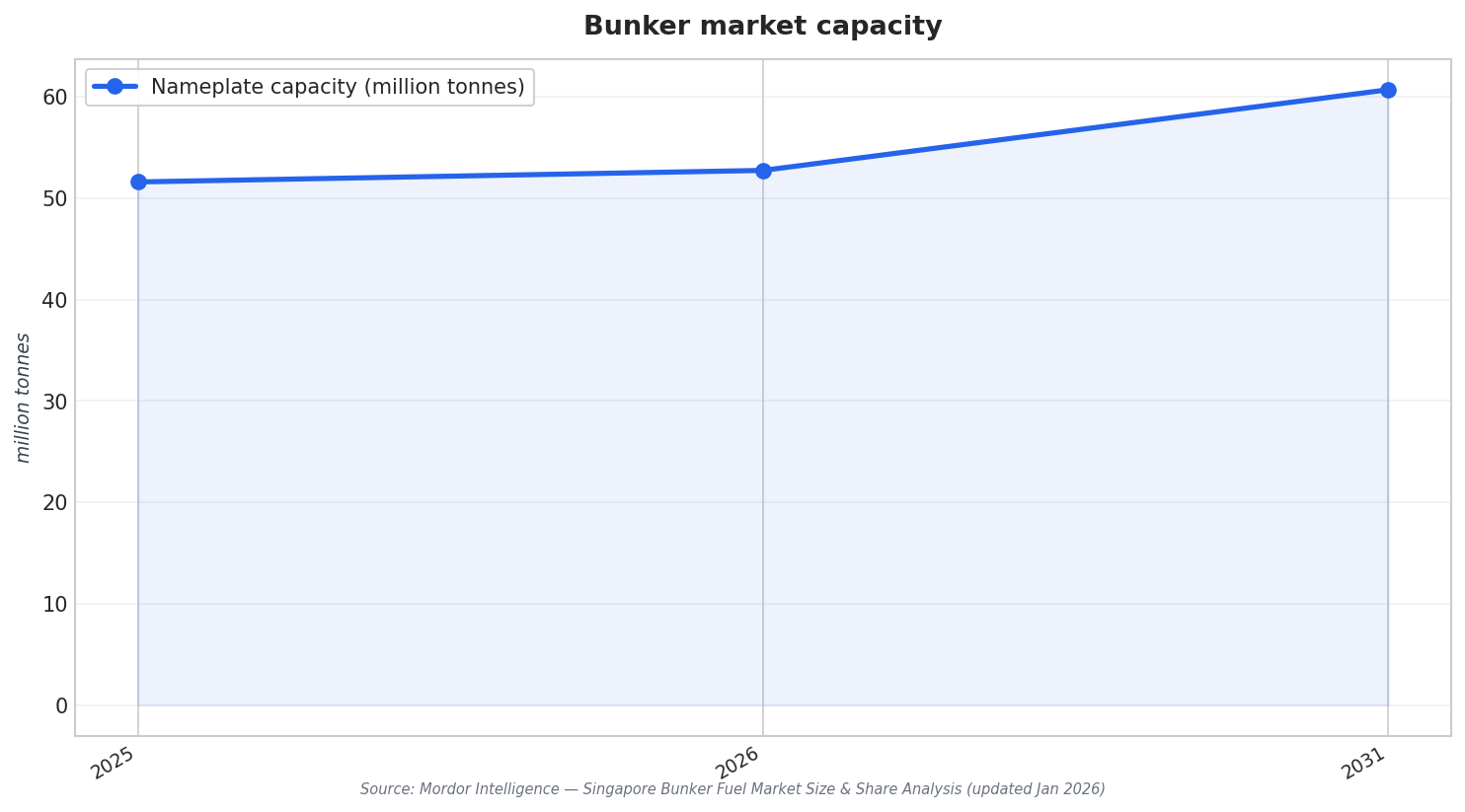
Singapore is using licensing, standards, and operational trials to shift alternative marine fuels from concept to routine. In 2024, the port supplied a record 54.92mn tonnes of marine fuels, a surge that Mordor Intelligence links to Red Sea conflict diversions that routed Far East–Europe traffic around the Cape of Good Hope and added roughly 8,500 nautical miles per voyage. That same analysis projects Singapore bunker fuel market nameplate capacity at 51.61mn tons in 2025 and 52.75mn tonnes in 2026, reaching 60.71mn tonnes by 2031. The point is not just volume. It is positioning a leading bunkering hub to enable the maritime energy transition through a broader set of fuels, including methanol.
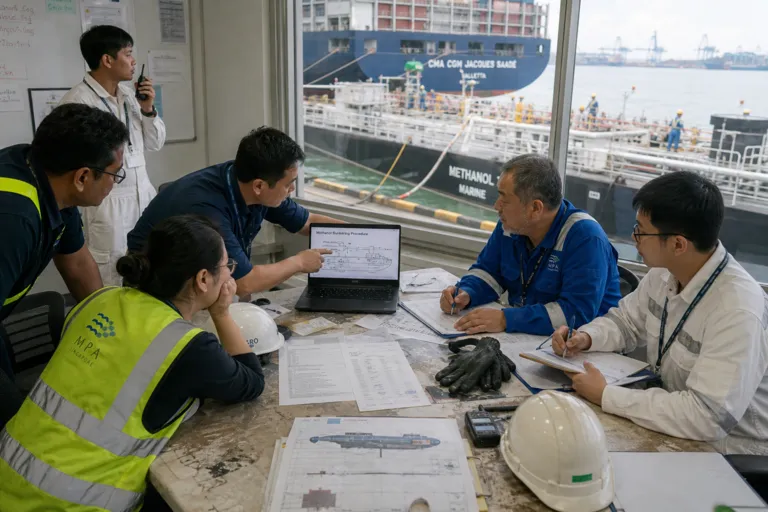
MPA’s methanol move is concrete. Singapore decided to introduce what F&L Asia calls the world’s first multi-year commercial licences for methanol bunkering, allowing licensed suppliers to deliver methanol as a marine fuel under a regulated framework from 1 January 2026. In March 2025, MPA launched a call for applications for methanol bunkering licences for the Port of Singapore. From 13 applicants, it selected Global Energy Trading Pte Ltd, Golden Island Pte Ltd, and PetroChina International (Singapore) Pte Ltd after assessments that included supply-chain robustness, safety practices, operational readiness, and the sustainability certification of the methanol they intend to supply. The licences run from 1 January 2026 to 31 December 2030.
From Trial-Only to Regulated Operations in 2026
Operational readiness is part of the story behind Singapore’s methanol push into 2026. Breakbulk.news reports that on 28 November 2025, MPA worked with Global Energy Trading Pte Ltd and Stellar Shipmanagement Services Pte Ltd to bunker 3,012 metric tonnes of methanol from the MT Kara to the container vessel Antonio Maersk. The same report frames this as Singapore’s first TR129 methanol bunkering trial and notes it also ran after dark as a stress test. F&L Asia adds that the licensing regime requires an end-to-end bunkering solution, where licensees act as both bunker suppliers and bunker craft operators, and that they own and operate at least one IMO Type 2 chemical tanker for safer methanol handling.
These steps land in a bunker market still dominated by conventional fuels, but under pressure to evolve. Mordor Intelligence says very-low-sulfur fuel oil (VLSFO) led with a 55.3% share in 2025, with ship-to-ship operations holding 41.1% share by bunkering method that year. It also notes the market’s price responsiveness, including HSFO consumption when the HSFO–VLSFO spread exceeds USD 150 per ton, and that suppliers must carry parallel VLSFO and HSFO inventories, inflating working-capital needs by roughly 15-20% compared with pre-2020 practice. In that context, Singapore’s methanol framework looks like a targeted effort to make an alternative fuel operationally routine rather than exceptional.
For the keyword topic—Singapore methanol bunkering pilot 2026—the signal is that the port is building a bridge from pilot trials to scalable commercial delivery. EnkiAI points to “Singapore’s regulated framework” as one of the 2026 milestones confirming methanol works as a marine fuel, and notes that Singapore issued three licences effective 1 January 2026 to Global Energy Trading, Golden Island, and PetroChina. F&L Asia argues the multi-year, port-wide scope is the differentiator, contrasting it with ports that have supported individual operations. In practical terms, Singapore is offering a defined start date, a five-year licence window, and clear operator requirements that can reduce uncertainty for shipowners and suppliers planning next steps.
What is Singapore doing to enable methanol bunkering from 2026?
How many methanol bunkering licences did Singapore issue, and who received them?
What happened in Singapore’s TR129 methanol bunkering trial?
How does the Singapore methanol bunkering pilot in 2026 connect to the wider bunker market?
What key operational requirement applies to Singapore’s methanol licensees?