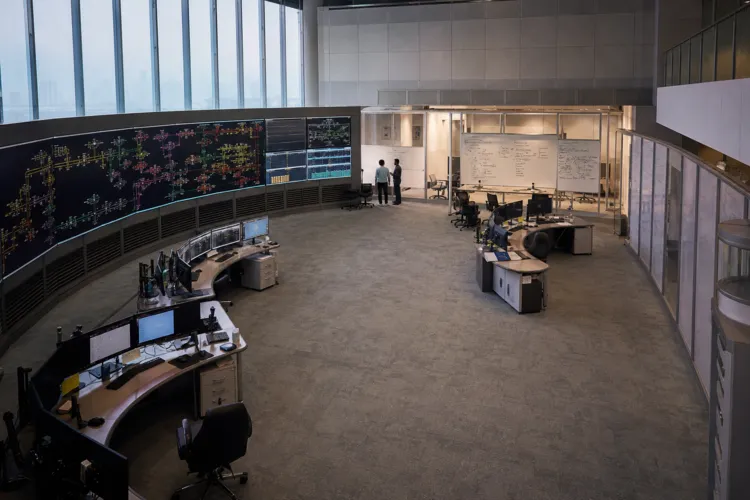

Singapore is preparing for a tougher energy environment where supply crunches and “resource nationalism” can disrupt established contracts and raise business risk. Speaking at the Singapore International Energy Week, Minister Tan See Leng said the city-state cannot fully “insulate” itself from regional or global shocks, including disruptions in global energy flows like the Strait of Hormuz. Against this backdrop, Singapore is pursuing diversification while “keeping costs in check” and protecting energy security, pairing new infrastructure plans with multiple fuel and technology pathways.
The near-term challenge is clear. Imported natural gas is currently used to generate about 95% of Singapore’s electricity needs, and existing gas-fired power plants have a total capacity of 12 GW. The vulnerability was underscored when Indonesia reduced natural gas supplies to Singapore, although the Energy Market Authority (EMA) said the cut was less than 2% of the Republic’s total daily gas demand. Singapore’s response includes deepening fossil fuel resilience while changing how it sources gas: when the Republic started importing gas, all of it was piped from neighbouring countries, but today about half is imported as LNG from a global portfolio of sources such as the US and Australia.
A 2026-Onwards Infrastructure Push to Make Diversification Real
To make diversification workable at scale, Singapore rolled out a five-year plan detailing the expansion of its power system from 2026. The plan includes five new power plants and an expansion of underground transmission cables. By 2031, those five new natural gas power plants will add to the more than 20 today and grow the country’s electricity generation capacity by 26%. EMA also requires power plants to be able to run on diesel, so they can tap Singapore’s reserves if gas supplies are severely disrupted. Separately, Saudi Arabia and Singapore signed an agreement to enable the storage of Saudi crude oil in the Jurong Rock Caverns from the second half of 2027, supporting the option to refine crude oil into diesel for power generation.
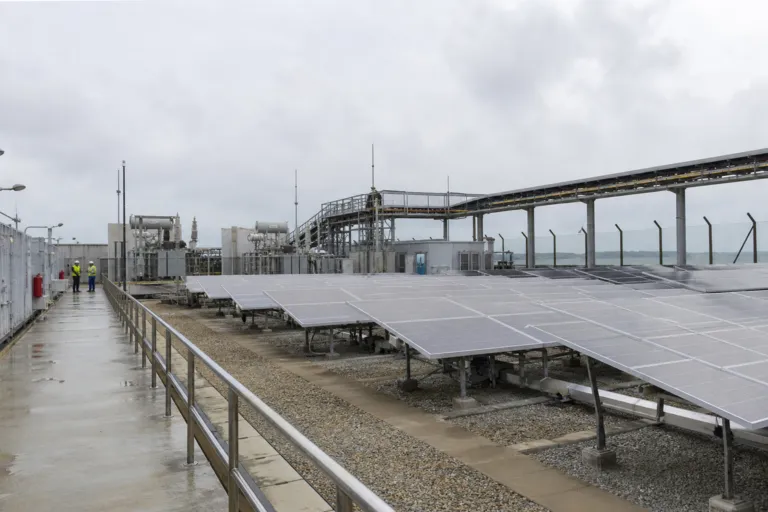
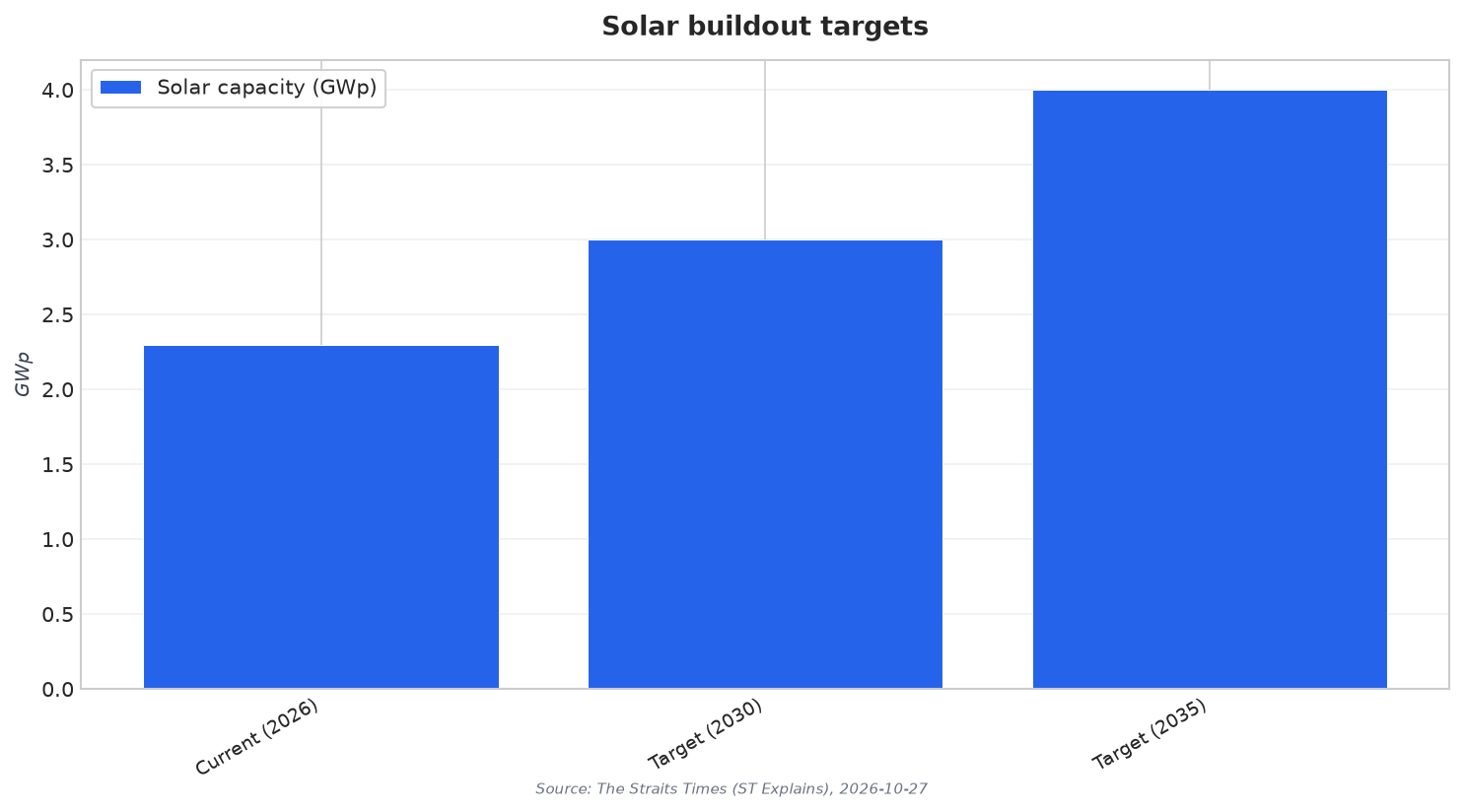
On the low-carbon side, Singapore is pushing solar and storage because they are among the most viable options available now. Singapore currently generates about 2.3 GWp of solar energy, and in the first half of 2026 solar made up 4.2% of the energy mix. The plan is to reach 3 GWp by 2030—about 5% of projected demand that year—supported by tripling energy storage systems to just over 1 GWh by 2030, up from 350 MWh today. Singapore also announced a new target of 4 GWp of solar by 2035, including more deployment on reservoirs, vacant land sites, and building rooftops.
Imports and emerging technologies are the other legs of the long game. Singapore has 14 electricity import projects in the works with combined capacity of more than 10 GW, spanning solar, wind, and hydropower from Malaysia, Indonesia, Cambodia, Vietnam, and Australia, with some imports potentially beginning in 2028. On Oct 26, Sembcorp Utilities received a conditional nod to import up to 1.3 GW of renewable electricity from and through Malaysia to Singapore, including options such as Malaysian solar and Vietnamese offshore wind. Singapore is also studying nuclear and geothermal energy, backed by a $75 million low-carbon research scheme, with advanced nuclear technologies like small modular reactors described as more suitable for dense environments and geothermal surveys suggesting significant underground heat potential. This is the practical intent behind Singapore energy planning in 2026: diversify supply as resource nationalism rises, without betting on a single solution.
Why is Singapore focusing on diversification amid resource nationalism?
How dependent is Singapore on natural gas today?
What solar and storage targets has Singapore set?
How large is Singapore’s pipeline of electricity import projects?
In Singapore’s 2026 plan to diversify supply amid energy resource nationalism, what role do new technologies play?