

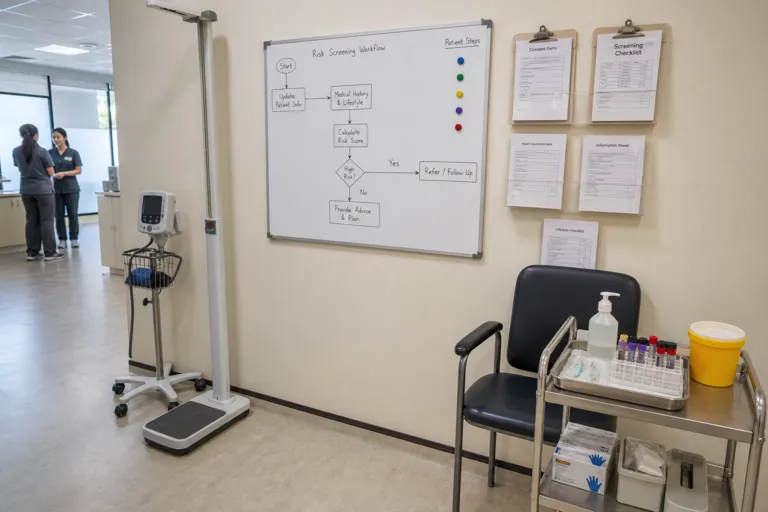
Singapore is preparing to change how it finds diabetes and high cholesterol risk before a formal diagnosis. From early 2027, the Assisted Chronic Disease Explanation using AI (ACE-AI) tool will be made available to primary care providers in Healthier SG GP clinics and polyclinics. The Ministry of Health (MOH) said the model uses patient information such as age and medical history to predict risk over the next three years. It is positioned as a preventive care move, where clinicians use the risk signal to intervene earlier rather than waiting for disease to surface through routine testing.
What makes the new approach consequential is what the “high risk” label implies and what happens next. MOH has stated that people flagged as high risk by ACE-AI have more than a 75% chance of being diagnosed with diabetes and/or hyperlipidaemia within the next three years. Those patients will be moved to annual cardiovascular disease (CVD) risk screening, stepped up from the current once-every-three-years schedule, and the screenings will be subsidised. Clinicians will be able to view each Healthier SG enrollee’s risk status through their Electronic Medical Records or Clinic Management System, supporting more targeted, personalised care plans.
Why 2027 Screening Could Look Very Different
In practice, ACE-AI is designed to standardise how doctors identify who should get closer follow-up, instead of applying the same schedule uniformly. The stated focus is diabetes and hyperlipidaemia, which Health Minister Ong Ye Kung described as “key drivers” of strokes and heart attacks. He said strokes and heart attacks affect a daily average of about 60 Singaporeans, and added that many cases can be prevented if early actions are taken, including lifestyle adjustments and medication. MOH also framed the deployment as digitally enabled preventive care that can help prevent or delay more serious cardiovascular events and potentially reduce long-term healthcare costs.
The programme is not presented as AI replacing medical judgment. The Government has emphasised that care should be AI-enhanced, not AI-decided, and that clinicians remain in the loop. Use of the tool will not be mandatory, but MOH said it “strongly encourages” primary care doctors to use it and has processes in place to track uptake. This positioning matters for trust, because the tool is meant to influence screening cadence and the way doctors recommend and adjust personalised care plans for Healthier SG enrollees.
The rollout also sits inside a broader preventive push that includes targeting areas with higher chronic disease rates. MOH has highlighted that diabetes and hypertension are more prevalent in northern Singapore than the national average, and that residents there are less physically active compared to the national average. Separately, MOH noted there were about 1,100 Healthier SG clinics as at February, indicating the scale at which the system could operationalise AI-guided risk flags once the tool is deployed. For readers tracking the Singapore ACE-AI chronic disease risk tool Healthier SG effort, 2027 is the hinge year when risk prediction, subsidised screening frequency, and primary care workflows are intended to connect end-to-end.
When will ACE-AI be rolled out to primary care providers in Singapore?
What does it mean if ACE-AI flags someone as high risk?
How will screening frequency change for high-risk patients?
Will the Singapore ACE-AI chronic disease risk tool for Healthier SG replace doctors’ decisions?
How many Healthier SG clinics were there as at February, according to MOH?