
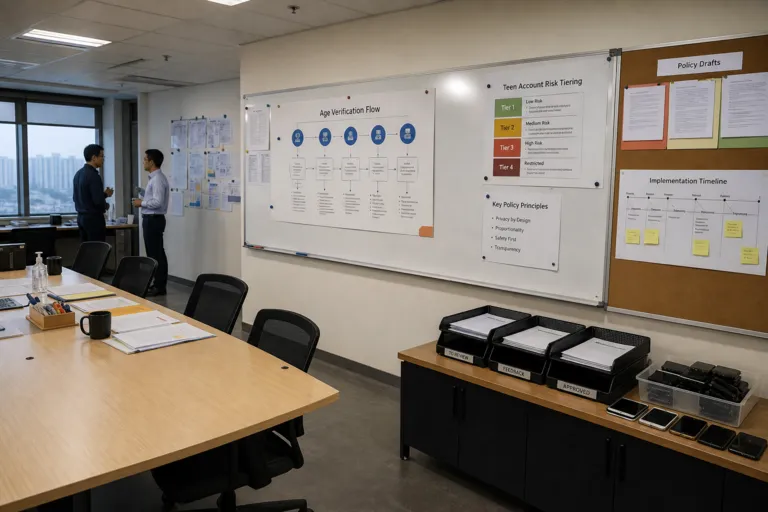
Singapore is preparing to require stronger social media age checks and youth safeguards as it develops new rules for users under 18. In an August 2026 National Day Rally address, Prime Minister Lawrence Wong said most platforms already set a minimum age of 13, but relying on users to declare their own age is “just not good enough.” He said platforms will have to put in place “robust and reliable checks” so the minimum age is properly enforced and children are “genuinely protected.” The direction of travel is clear: if a platform wants to serve young users in Singapore, it must meet requirements that prioritize safety by design.
The push is tied to concerns about harmful engagement patterns and youth well-being. Wong cited a 2023 study by the National Council of Social Service stating that one in six young people aged 10 to 24 in Singapore show signs of problematic social media use. He also flagged features designed to keep users constantly engaged, and pointed to endless scrolling as an example of what could be “cracked down on” for younger users. This policy debate is not framed as a simple ban; it is framed as enforcing minimum ages and requiring product changes that reduce risk for minors.
How Singapore Could Enforce Age Checks and Safer-by-Design Features
Singapore’s approach includes an enforcement lever aimed at non-compliant platforms. Wong said additional restrictions could include raising the minimum age of access to a platform beyond 13 if safeguards remain inadequate, and Minister for Digital Development and Information Josephine Teo later described a specific lever that could raise the minimum age to 18 for platforms that refuse to comply. Teo has confirmed no law is in force today, and that a bill is expected in early 2027. She has also discussed possible measures such as a daily time limit, autoplay switched off by default, and tighter limits on messages from strangers.
On the technical side, officials have pointed to real-world methods already used elsewhere in Singapore’s digital ecosystem. Reporting on the rally noted that app stores operating in Singapore have already begun blocking users under 18 from downloading unsuitable apps. The checks described include verifying government-issued identity documents or credit card information, scanning faces, or analyzing online usage patterns. Separately, ID Tech reported that since April, app stores serving the country have had to screen users estimated to be under 18 and stop them downloading age-inappropriate apps. These examples show the government is considering a spectrum of age-assurance methods rather than a single mandated tool.
Public sentiment and governance changes are also building pressure for action in the Singapore social media age verification 2026 discussion. A Jumio 2026 Online Identity Study found 84% of Singapore consumers believe age-gated content harms minors, and 81% in Singapore say they are willing to verify their age online to protect minors (with 75% globally expressing willingness). Meanwhile, the Online Safety Commission (OSC) began work in June 2026, offering victims—or their parents, guardians, or authorized representatives—a direct reporting route on the OSC website. Teo has said platforms have known about age-assurance measures “for a long time,” and about the stronger safeguards for nine to twelve months, signaling expectations are already being set ahead of legislation.
What did Singapore’s leaders say is wrong with self-declared ages on social media?
What is the possible penalty for a platform that won’t add stronger teen safeguards?
How are app stores in Singapore already checking age for under-18 protections?
What did the 2023 Singapore study cited by PM Wong find about youth social media use?
What does the Singapore social media age verification 2026 debate point toward next?