
Terminal 5 (T5) at Singapore’s Changi International Airport is being developed to meet growing passenger traffic. Airport Technology estimates the project at approximately $10bn (S$12.96bn) and calls it the biggest expansion at Changi Airport to date. The development sits within Changi East, which also includes a three-runway system and a network of inter- and intra-terminal tunnels. The single integrated terminal is planned on a 1,080-hectare greenfield site to the east of the airport, and construction began with a ground-breaking ceremony in May 2025. The first phase is expected to open in the mid-2030s.
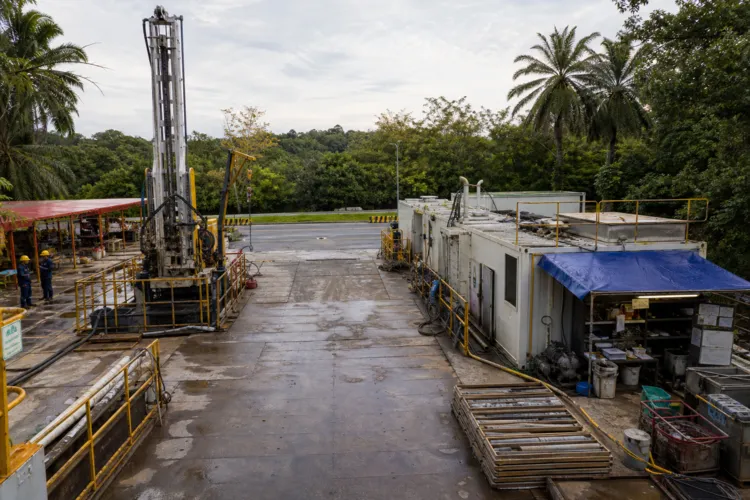
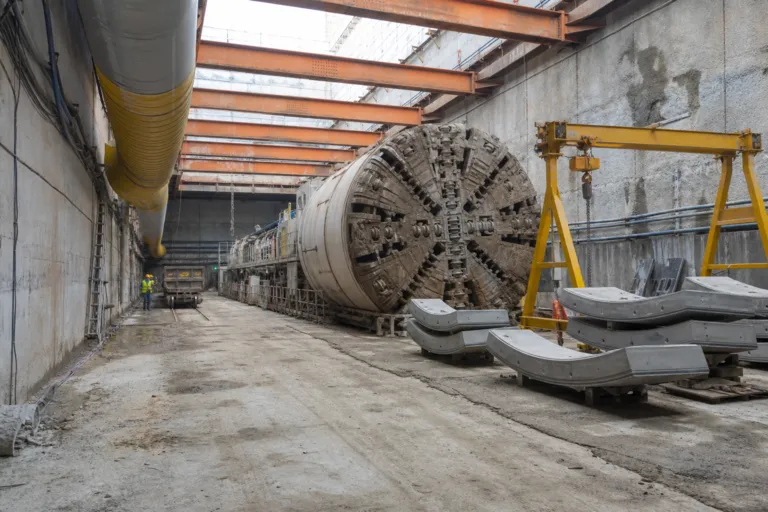
The tunnel scope matters because T5 is designed to change how people and systems move across the airport. Airport Technology states that an 18km-long network of tunnels will establish airside connections within T5, and between T5 and existing Terminals 1, 2, 3 and 4. The tunnels are intended to support convenient movement of baggage, passengers, and airside vehicles. Another report describes large-diameter tunnels in reclaimed land that are opened by specialized excavation machines operating beneath the existing second runway without interrupting aircraft flow. In that context, the Singapore Changi Terminal 5 tunnels contract 2026 topic is less about a single corridor and more about stitching the whole airside operation together underground.
What the Tunnelling Enables for Capacity, Operations, and Resilience
Capacity is the headline outcome that these connections are meant to unlock. Airport Technology says T5 will handle up to 50 million passengers a year in the initial phase and increase Changi’s total annual passenger handling capacity to 135 million. Wikipedia similarly states the airport’s four current passenger terminals can handle 82 million passengers a year, and that T5 is expected to handle an additional 50 million passengers per year when completed. Design choices also point to operational resilience. Airport Technology reports that T5 was reassessed after a two-year pause in 2020, and that the break enabled Singapore’s Ministry of Transport (MOT), the Civil Aviation Authority of Singapore (CAAS), and Changi Airport Group (CAG) to make the design more modular, robust, and sustainable.
The tunnelling work is also taking shape in a wider construction pipeline with large contract values. Mordor Intelligence states that construction on Changi Terminal 5 started in 2025 after USD 3.56 billion in substructure and airside contracts were awarded, and adds that Changi Airport Group awarded USD 3.56 billion in contracts for Terminal 5 foundations and USD 712 million for airside infrastructure in May 2025. It also notes complex marine, tunnelling, and aviation packages are lifting demand for specialist engineering services, robotics, and large-format precast elements. Separately, Singapore Voice lists “two contracts worth S$4.5 billion awarded (May 2025).” Together, these figures show how underground and airside packages sit alongside major foundation work, even as individual tunnel contract values are not itemized in the sources.
The scale of the build-out extends beyond the terminal box and into national investment themes. A GlobeNewswire report says Tuas Port and Changi Terminal 5 represent around USD 15 billion in public investment, and that complex marine, tunnelling, and aviation packages are increasing demand for robotics and digital project management. That aligns with the long timeline described elsewhere, with construction running toward the mid-2030s. In practical terms, the tunnels are not just civil engineering; they are the hidden logistics layer that supports a flexible terminal concept, connects to existing terminals, and keeps airport operations moving while the biggest expansion in Changi’s history is built out at Changi East.
What is the tunnels scope for Changi Terminal 5?
When did construction for Changi Terminal 5 begin, and when is it expected to open?
How much capacity is Terminal 5 expected to add at Changi Airport?
What contract values have been cited around the Singapore Changi Terminal 5 tunnels contract 2026 topic?
Why are tunnels described as critical for building T5 without disrupting operations?