
Singapore’s port system sits at the center of its trade model. Wikipedia describes the Port of Singapore as a collection of facilities and terminals that handle maritime trade in the city-state, and notes that, since 2015, it has been ranked as the world’s top maritime capital. The same source also says it is currently ranked as the world’s second-busiest port by total shipping tonnage, and that it transships a fifth of the world’s shipping containers and half of the world’s annual crude oil supplies. In that context, the push to build a single next-generation terminal at Tuas is framed by multiple sources as a continuation of Singapore’s role as a high-connectivity transshipment and logistics hub.
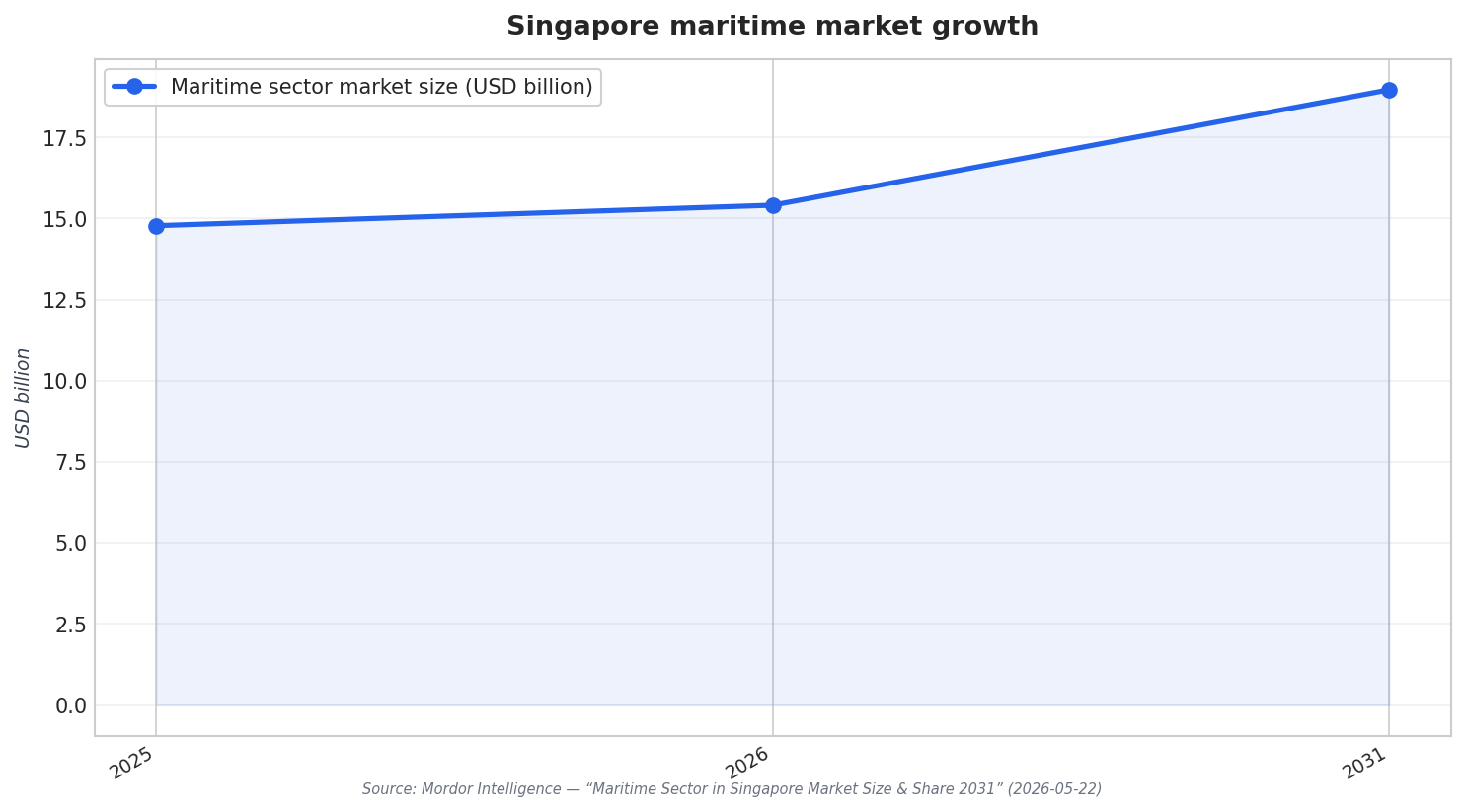
Market sources tie this port evolution to measurable activity. Mordor Intelligence estimates the Maritime Sector in Singapore market size at USD 15.41 billion in 2026, up from USD 14.78 billion in 2025, with a projection of USD 18.97 billion by 2031 at a 4.25% CAGR over 2026–2031. In the same report, container throughput is cited at a record 41.12 million TEU in 2024, with about 85% described as transshipment cargo. Verified Market Research separately values the Singapore Container Transshipment Market at USD 1.52 billion in 2024 and projects USD 1.74 billion by 2032, growing at a 1.69% CAGR from 2026 to 2032. These figures frame why Singapore continues to invest in port capability and operating efficiency.
From Consolidation to a Fully Automated Operating Model
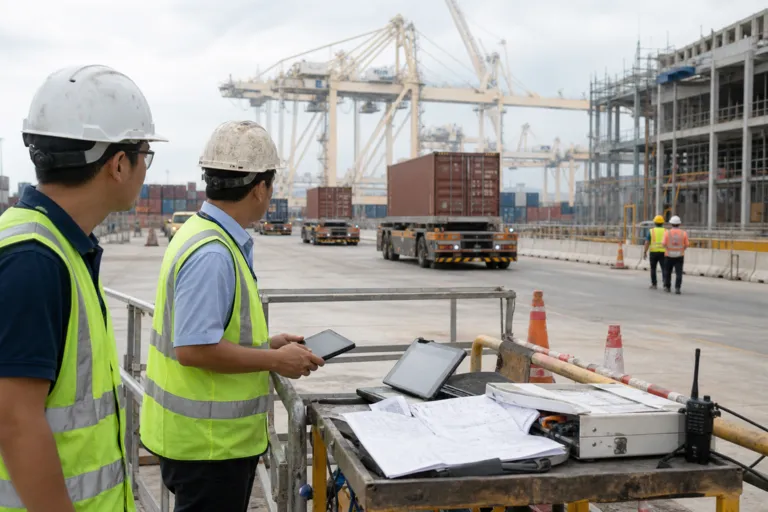
The core proposition of the Tuas project is consolidation plus automation. The Cooperative Logistics Network states that, once fully completed, the Tuas Mega Port will consolidate existing terminals into a single, highly automated facility, with capacity exceeding 60 million TEUs annually. IndexBox goes further on positioning, saying the facility is anticipated to be fully operational in the 2040s and is set to be the largest fully automated container terminal globally, with an annual handling capacity of 65 million TEUs. Together, these sources describe a long-term buildout anchored on automation at scale, designed to support high-throughput transshipment patterns and the port’s hub function.
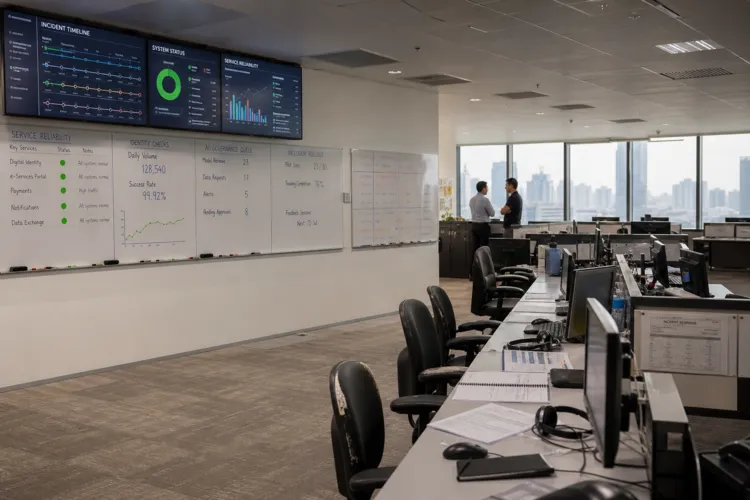
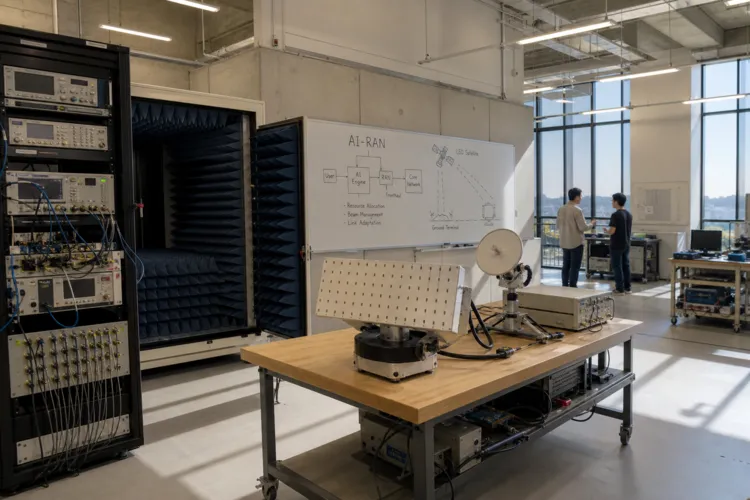
Automation is described as a system, not a single machine. The Cooperative Logistics Network highlights an approach that blends automated quay cranes, yard cranes, and guided vehicles for repetitive tasks, while planners manage exceptions and peak pressures. IndexBox places Tuas within a wider national logistics push that includes the Networked Trade Platform, described as digitizing trade paperwork and linking shippers, customs agencies, freight forwarders, banks, and logistics providers. The same IndexBox article also lists areas Singapore is investing in across smart logistics technologies, including AI-driven analytics, IoT-enabled tracking, autonomous vehicles, warehouse automation, and predictive maintenance, reinforcing the idea that port automation benefits from connected digital processes beyond the terminal gate.
For Singapore, port modernization also sits alongside broader market signals and operating pressures. Mordor Intelligence points to accelerated automation at Tuas Port as part of the momentum behind the maritime sector’s outlook, while also noting that EU Emissions Trading System (EU-ETS) surcharges can compress liner margins. The same report cites bunker volumes of 54.92 million tonnes in 2024 and references mandatory Electronic Bunker Delivery Notes from April 2025. Another source, Sustainability Times, claims electrified equipment and vehicles at Tuas contribute to a 50% reduction in carbon emissions compared to traditional diesel-powered machines, and says buildings require nearly 60% less electricity, while consolidation reduces inter-terminal haulage. Taken together, Tuas mega port automation is presented as a capacity, reliability, and systems-integration play, with sustainability claims also featuring in the public narrative.
When is the Tuas Mega Port expected to be fully operational?
What annual container capacity do sources cite for the Tuas Mega Port?
How big is Singapore’s maritime sector market, according to Mordor Intelligence?
How does Tuas Mega Port automation change daily terminal work?
What did sources report for Singapore’s container throughput and transshipment share in 2024?