
Singapore is building its next phase of live event capacity around experiences that can flex between entertainment and business events. A major signal is the planned 15,000-seat arena that will be part of Marina Bay Sands’ (MBS) expansion. Mordor Intelligence reports that Las Vegas Sands broke ground in July 2025 on an ultra-luxury IR2 expansion valued at USD 8 billion (SGD 10.3 billion). The scope includes a 570-suite luxury hotel tower, approximately 200,000 sq ft of premium MICE space, and a 15,000-seat arena for international events, plus expanded F&B and retail offerings. In the same report, development costs are said to have more than doubled from the initial USD 3.3 billion estimate in 2019, highlighting how experience-led upgrades are becoming capital intensive.
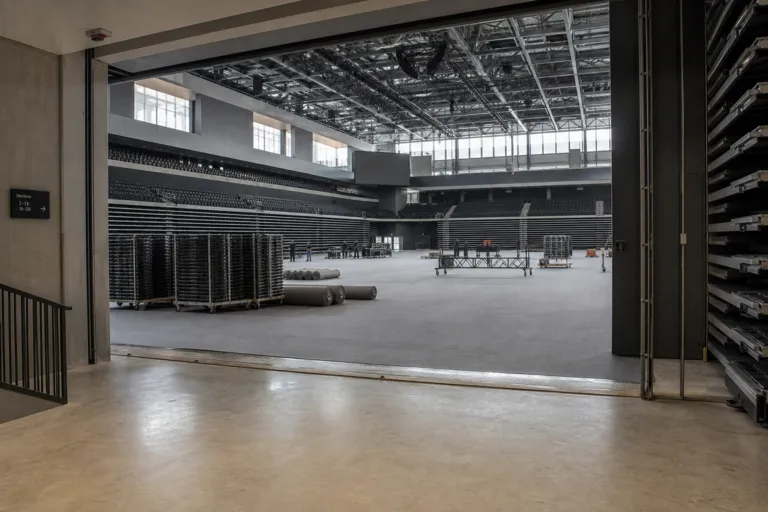
At the city level, the venue ecosystem is also diversifying beyond a single headline project. IQ Magazine notes that Singapore’s main arena venue is the Singapore Indoor Stadium, scalable from 4,000 to 12,000 people, located in The Kallang entertainment complex. The same source describes a new, multi-purpose 9,000-capacity arena at Singapore EXPO called Apex @ EXPO, built with large-scale, immersive experiences in mind and equipped with state-of-the-art AV, lighting, and digital technologies. It also points to the upgraded 6,700-capacity Arena @ EXPO, which completed upgrade works in May 2025, and hosted names including Sting, Mariah Carey, Tyla, and Westlife in the past year. Together, these additions show how “Singapore mega events arena entertainment 2026” is less about one room and more about an integrated circuit that can scale audience size and production ambition.
Why the Arena Is Really a Hospitality Play
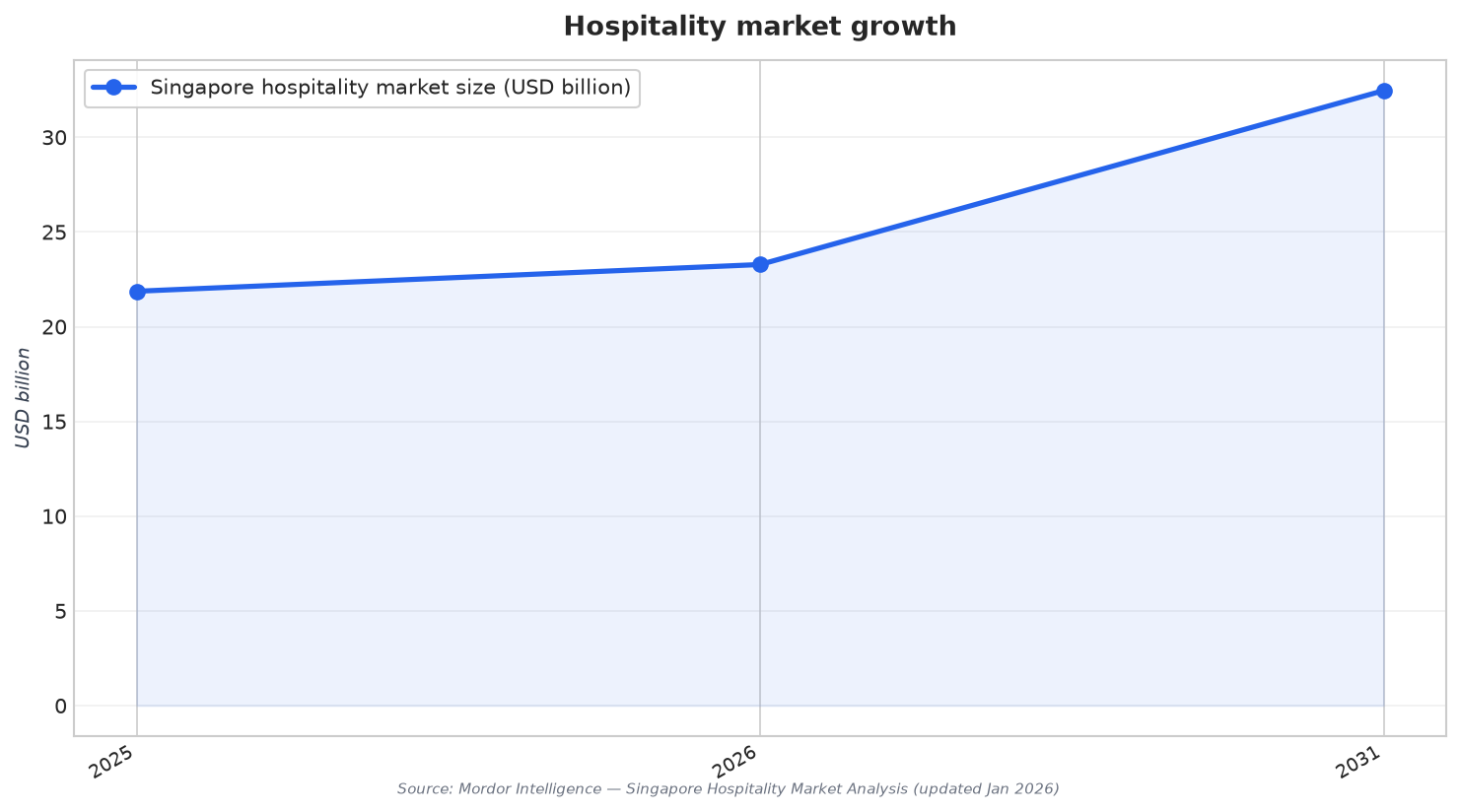
New arenas matter because they feed into hotels, transport, and the broader visitor economy, where competition is increasingly about experience. Travel And Tour World states that Singapore currently has more than 74,000 hotel rooms, with supply expected to increase steadily as new developments enter the market. As inventory grows, the same source argues hotels will compete more on guest experience, branding, service quality, and operational efficiency. Mordor Intelligence adds a demand-side view: the Singapore hospitality market is expected to increase from USD 21.87 billion in 2025 to USD 23.28 billion in 2026, and reach USD 32.46 billion by 2031, growing at a CAGR of 6.87% over 2026–2031. It also notes that Marina Bay and Downtown Core accounted for 38.77% of hospitality market share in 2025, matching the logic of placing major event demand close to premium room supply and established visitor districts.
The experience economy angle is not only about what happens on stage; it is also about how organisers package the full journey. MarkWide Research describes “integrated MICE platforms,” where corporate event planners adopt bundled audio-visual and catering packages to streamline procurement for multi-day conventions. It also highlights that specialised event technicians cluster in Singapore’s Marina Bay and Sentosa precincts, anchoring high-value production capabilities for international corporate conventions and brand activations across Southeast Asia. IQ Magazine reinforces the same direction at Singapore EXPO, describing an adjoining gallery that gives organisers extra space to add on experiences and flexible seating configurations to accommodate different productions. In practice, the new and upgraded venues are being designed to make add-ons, pre-function activations, and immersive formats easier to execute.
Ultimately, Singapore is positioning new arenas as a bridge between concerts, sporting events, and conventions rather than treating them as separate industries. Travel And Tour World explicitly frames the MBS development as including a 15,000-seat entertainment arena capable of hosting international concerts, sporting events, and conventions. IQ Magazine similarly notes a 15,000-capacity arena called Sands Theatre expected for completion in 2030. Mordor Intelligence adds timing and performance context: completion of the IR2 project is expected by June 2030, with opening in January 2031, and MBS reported record Q1 2026 revenues of USD 1.5 billion with EBITDA rising 30% year-on-year, driven by high-value tourism. The bet is clear: create reasons to travel, then compete on the total experience from arrival to after-show.
What is Singapore’s new 15,000-seat arena connected to?
When is the 15,000-capacity arena expected to be completed?
How does this fit the Singapore mega events arena entertainment 2026 topic?
What other arena capacities are being added or upgraded at Singapore EXPO?
What hospitality signals suggest experiences will matter more as venue capacity grows?