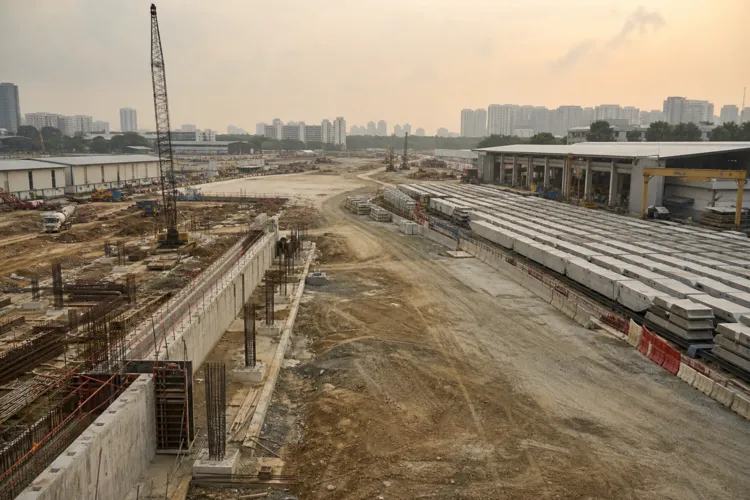


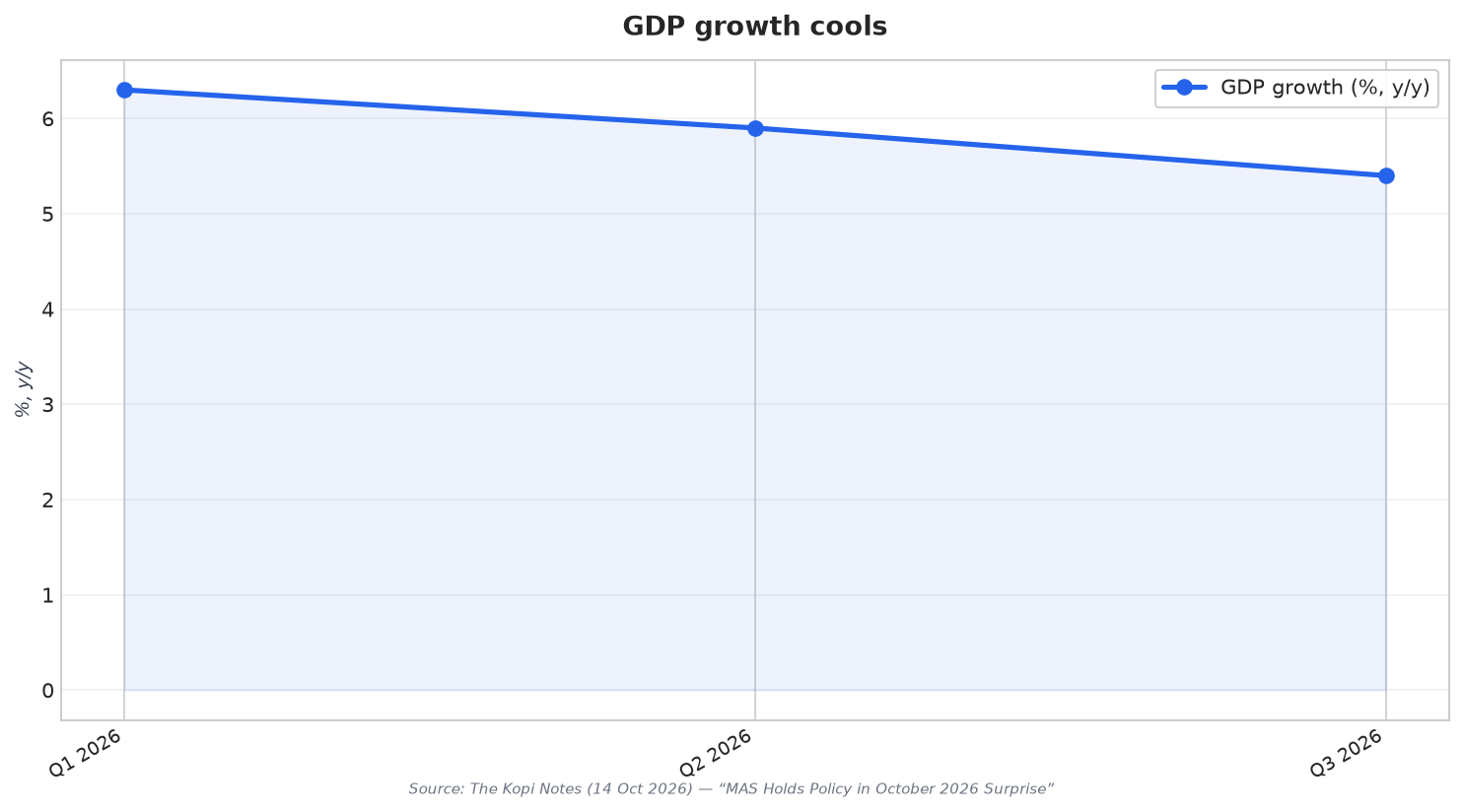
Singapore’s advance GDP estimate showed the economy expanded 5.4% year on year in Q3 2026. The pace cooled from Q2, which multiple reports described as a four-year high, yet it still came in stronger than the 5% consensus in a Reuters poll of economists. Sector signals were mixed. Government data pointed to a decline in manufacturing that was offset by an expansion in construction, while manufacturing remained a large part of the economy at about 20% of GDP. The Q3 result also sat within the government’s upgraded full-year 2026 growth outlook of 4.5% to 5.5%.
The same morning as the Q3 GDP release, MAS kept monetary policy unchanged. The decision marked a pause after two straight rounds of tightening in April and July, which MAS had linked to inflation risks from higher energy costs. MAS reiterated that inflation is expected to stay elevated in the near term due to higher energy and food prices, and then ease from mid-2027 “as import costs ebb and domestic price pressures stay subdued.” In explaining its stance, MAS also said the Singapore economy should “continue to expand at a firm pace in the immediate quarters ahead, and moderate thereafter as the AI cycle eases from its exceptional pace and global financial conditions tighten.”
What the Hold Means in Singapore’s Exchange-Rate System
Unlike central banks that set an interest rate, MAS manages the Singapore dollar against a basket of currencies, letting the exchange rate move within an undisclosed policy band. In October 2026, MAS maintained the existing rate of appreciation of the S$NEER band, with no change to the band’s width or its centre level. Some commentary noted the S$NEER had strengthened into the upper half of the policy band since July, supporting the view that earlier tightening was still working through the economy. This framework helps explain why a strong GDP print can still coincide with a policy hold: MAS can rely on the current appreciating band to lean against imported inflation without adding more tightening immediately.
Inflation details were central to the pause. Core inflation was cited at 2.1% year on year in July–August, up from 1.5% in Q2 in one analysis, while another report said MAS narrowed its forecast for core inflation to 1.5% to 2% for the year, from an earlier projection of up to 2.5%. One report also said headline consumer price inflation was expected to average 2% in 2026, with core inflation projected at 1.5% to 2.0%, versus an earlier 1.5% to 2.5% range. Market expectations leaned the other way: one Reuters poll described 10 economists unanimously looking for a further +25 basis point slope increase, while a Bloomberg survey said only three of 20 economists predicted the hold.
Growth composition also helps frame why the Singapore Q3 2026 GDP 5.4% MAS holds policy storyline is not as contradictory as it sounds. Reports pointed to technology-related sectors leading growth, with construction, financial services, and real estate also performing well, while some consumer-facing segments showed softness. The government has kept its 2026 GDP forecast at 4.5% to 5.5% after an upgrade in August, describing AI-linked industries and exports as key supports earlier in the year. MAS, meanwhile, emphasized that the current appreciating policy band should continue to strengthen and curb imported inflation, while leaving the door open to respond if medium-term price stability comes under threat.
Why did MAS hold policy even as Singapore’s Q3 2026 GDP grew 5.4%?
What changed in Singapore’s growth picture in Q3 2026?
What exactly did MAS leave unchanged in October 2026?
What is Singapore’s official 2026 GDP growth forecast range?