
Singapore’s rise in pharma and biologics is increasingly about making, finishing, packaging, and shipping regulated products with confidence. IndexBox characterizes Singapore’s role in the global pharmaceutical value chain as a “high-compliance regional hub and a sophisticated demand market,” rather than a primary manufacturing base for bulk materials. That positioning matters for global supply chains that need reliable execution for finished products, especially as therapy mixes shift toward higher-value biologics, biosimilars, vaccines, and specialty drugs. In this context, the Singapore pharmaceutical market was reported at USD 7.40 billion in 2024 and is projected to reach USD 12.19 billion by 2033, with a 5.5% CAGR.
Large, visible investments underline why many stakeholders frame a Singapore pharmaceutical manufacturing hub 2026 narrative around biologics capability and regulated delivery. Pharma Advancement reports AstraZeneca announced USD 2 billion to construct an antibody-drug conjugate (ADC) manufacturing facility, described as one of the largest pharmaceutical investments in Southeast Asia. The same source cites AbbVie’s USD 223 million expansion of its Singapore biologics facility, adding 24,000 liters of drug-substance capacity and creating over 100 new jobs. It also notes Novartis expanded its plant with a USD 256 million investment aimed at supporting increased biologics demand. Together, these projects signal that manufacturers are treating Singapore as core infrastructure for Asia-Pacific operations.
Why Fill-Finish and Packaging Are the Export Engine
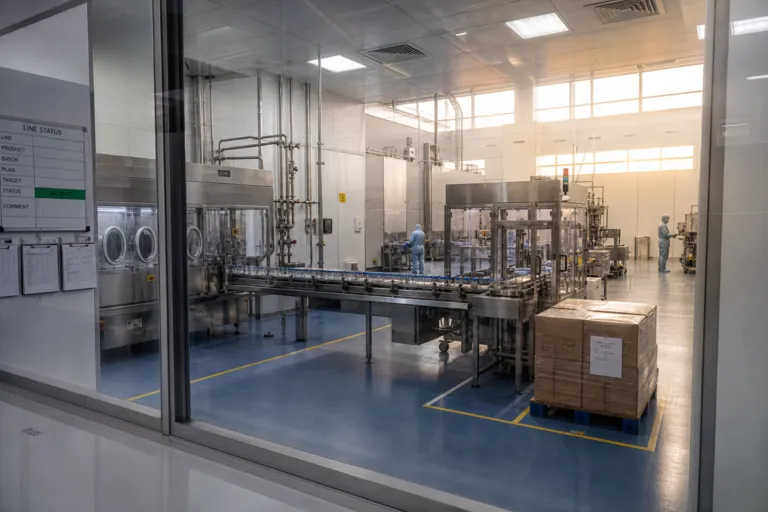
Packaging and fill-finish are not side activities in Singapore’s model. They are central to how specialty therapies get export-ready. Nexdigm describes Singapore’s pharmaceutical packaging market as driven by the country’s positioning as a regional CDMO hub for sterile fill-finish and biologics packaging, and by its role as a regional export launchpad for specialty therapies. It also states that primary packaging—such as sterile barrier systems, vials, and prefilled syringes—holds a leading share, reflecting specialization in sterile fill-finish and biologics manufacturing. Nexdigm highlights Thermo Fisher Scientific’s May 2023 opening of a 24,000 square meter sterile drug manufacturing facility in Singapore, featuring a high-speed, fully automated aseptic fill-finish line for small and large molecules.
Regulation and compliance are part of why “made in Singapore” can travel. Nexdigm notes Singapore’s Health Sciences Authority (HSA) regulates pharmaceutical packaging and labeling under the Health Products Act, implemented in 2007, and the Health Products (Therapeutic Product) Regulations 2016. It specifies that therapeutic products must display a control number, expiry date, and registration number, and that applications are processed through the PRISM electronic regulatory platform. Nexdigm also points to harmonization with international frameworks including PIC/S and ICH, and frames Singapore as a regional export hub serving Malaysia, Indonesia, and Australia, shaping demand across vaccine, biologics, solid dosage, and medical device packaging applications.
Singapore’s broader life-sciences logistics and distribution strengths reinforce the manufacturing and packaging story. A 2026 BioNixus report estimates the Singapore medical devices market at USD 2.3–2.8 billion in 2026, growing at approximately 7% CAGR, and describes Singapore as the primary regional medical device distribution hub for Southeast Asia. It cites infrastructure advantages including Jurong Innovation District and Tuas Biomedical Park for manufacturing and distribution, plus connectivity through Changi Airport and port infrastructure for shipping throughout ASEAN. While devices are distinct from medicines, the same distribution logic—regulated handling, time-sensitive freight, and regional access—supports how finished pharma and biologics can be shipped worldwide from Singapore.
What is driving Singapore’s role in pharma and biologics exports?
Which major investments signal momentum in Singapore’s biologics manufacturing?
How does HSA regulate pharmaceutical packaging and labeling in Singapore?
What makes Singapore’s 2026 pharmaceutical manufacturing hub outlook credible for fill-finish?