

Real-time payment systems have become mainstream infrastructure, but that success inside a country does not automatically translate to travel and trade across borders. Globally, real-time payment volume reached 266.2 billion transactions in 2023, showing how normal “instant” has become in day-to-day life. Yet when systems built for one jurisdiction need to work in another, the experience often falls back to cards, cash, or downloading a separate wallet. Scan-to-Pay can look simple on the surface, but cross-border payments require routing, protocol translation, FX conversion, risk screening, compliance, settlement, reconciliation, and confirmation—often across two jurisdictions at once.
Southeast Asia has already pushed interoperability forward through the ASEAN Payment Connectivity agenda. By 2024, the region had more than a dozen live cross-border QR linkages, connecting schemes such as PromptPay, DuitNow, PayNow, and QRIS. These links show demand and prove the customer experience can stay familiar: open an app, scan, confirm. Bilateral corridors also moved early. Since 2021, Singapore’s PayNow and Thailand’s PromptPay linkage has been highlighted as the model by which other bilateral arrangements in the region would operate, even as broader integration becomes more complex due to regulatory fragmentation, differing technology maturity, and limited interoperability between domestic systems.
From Bespoke Links to a Hub Model
Project Nexus is positioned as the next step because bilateral connections are valuable but bespoke. Each new corridor can require tailored legal, FX, compliance, and operational arrangements, and complexity grows as more markets join. Nexus proposes a hub model: each instant payment system connects once to a central framework, then gains access to other connected systems. Nexus spun out of the Bank for International Settlements (BIS) and set up in Singapore in March 2025, with an ambition to let independently built instant payment schemes communicate, translate, and settle seamlessly across countries. Between 2021 and 2024, the BIS worked on Nexus with central banks including Indonesia, Malaysia, the Philippines, Singapore, Thailand, India, and the European Central Bank (ECB) to prove the concept.
The “one tap” vision becomes tangible when you look at how national rails are already scaling. India’s UPI is often cited as a benchmark for volume: it processed 131 billion transactions worth USD 1.8 trillion in 2024, and 228.3 billion UPI transactions in 2025. India and Singapore also built a direct linkage: the UPI–PayNow connection, described as the world’s first cloud-based, real-time connection of two instant-payment systems, reached 19 Indian banks and the major UPI apps in 2025. Project Nexus is designed to make that kind of connectivity less one-off and more repeatable, so PayNow-style experiences can extend across multiple partners without rebuilding the entire corridor each time.
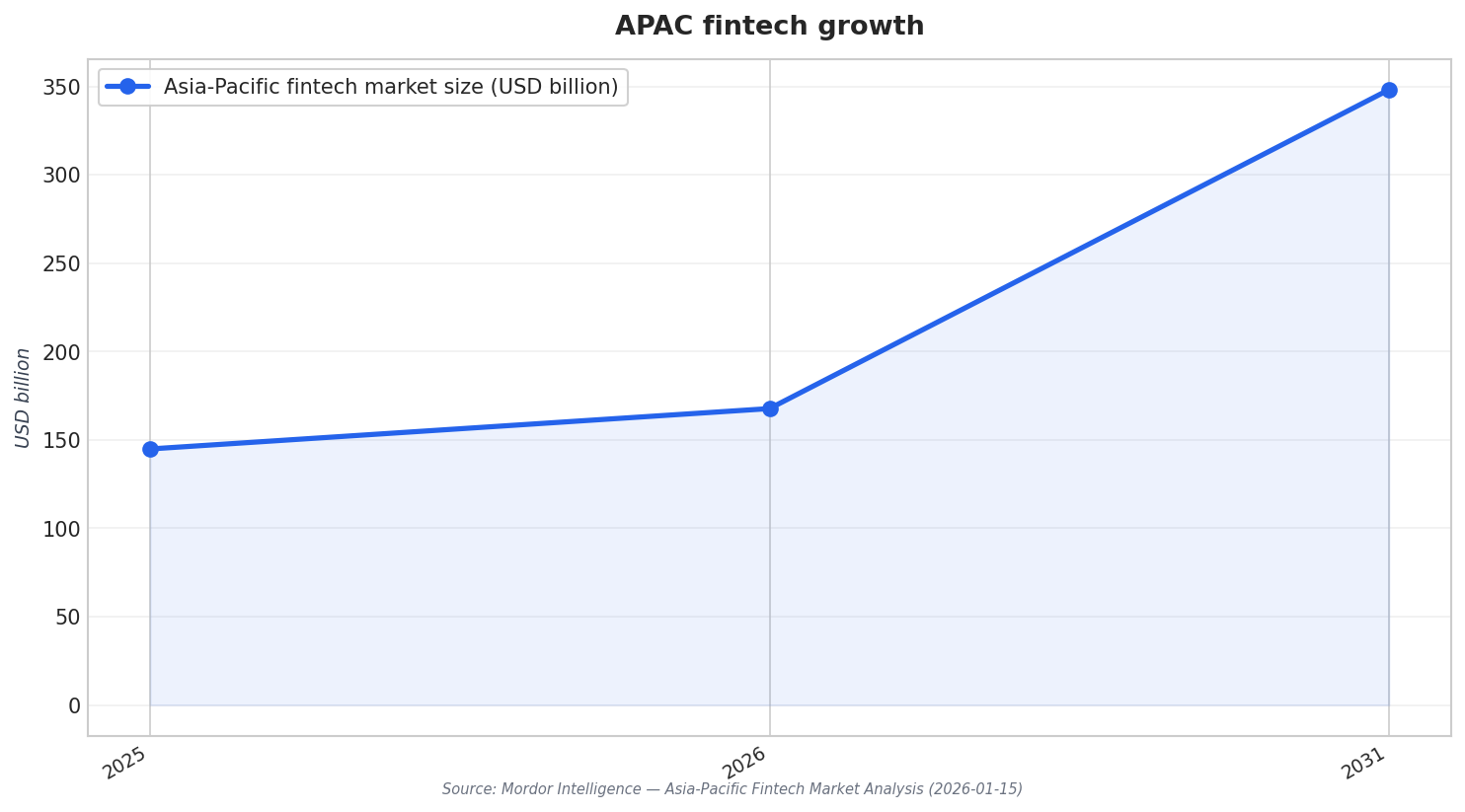
This push sits inside a wider shift in Asia-Pacific fintech. Mordor Intelligence estimates the Asia-Pacific fintech market at USD 167.71 billion in 2026, up from USD 144.87 billion in 2025, with projections of USD 348.1 billion by 2031 at a 15.76% CAGR over 2026–2031. In that report’s 2025 market split, digital payments held 64.93% of share, retail end-users accounted for 70.88%, and mobile applications made up 72.62%—a backdrop that favors payment rails people can use in the apps they already trust. Against that context, Singapore Project Nexus cross-border payments are not about adding “another wallet,” but about making existing domestic systems interoperable so cross-border retail payments can move faster, cheaper, and with clearer confirmation and reconciliation across jurisdictions.
What problem is Project Nexus trying to solve for PayNow users?
How is Nexus different from bilateral payment linkages like PayNow–PromptPay?
What proof points show cross-border instant payments are already scaling?
How big are UPI transaction volumes used as a benchmark in this discussion?
What does the term ‘Singapore Project Nexus cross-border payments’ mean in practical terms?