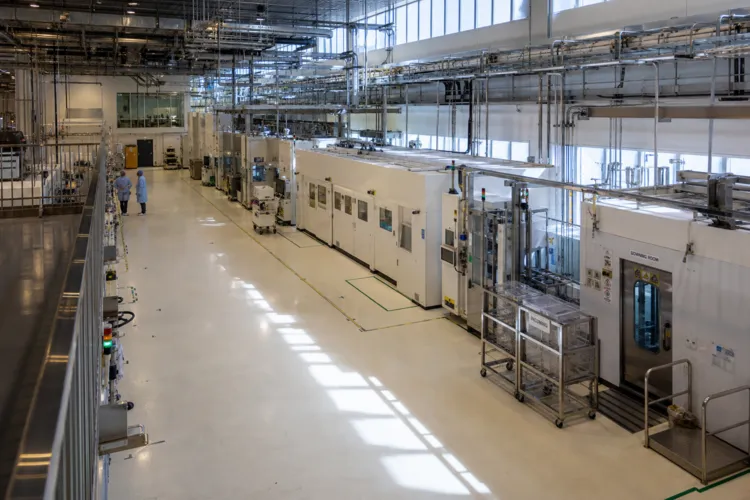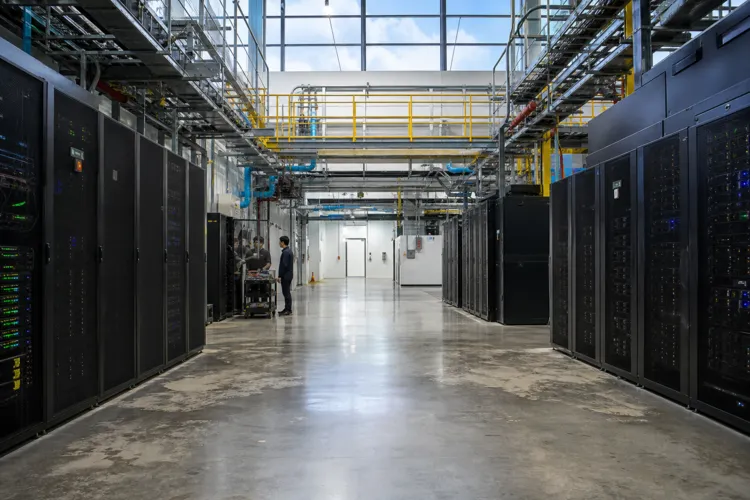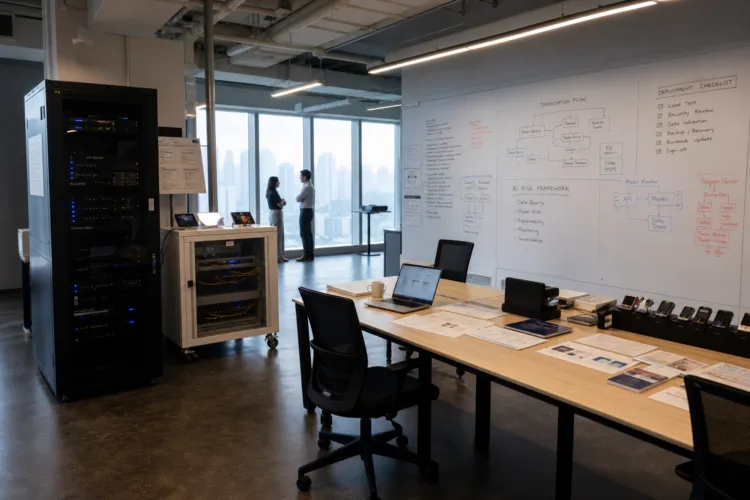

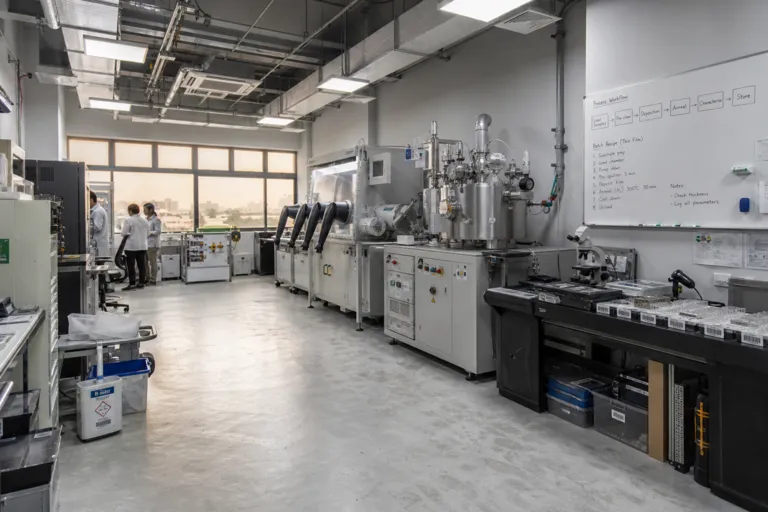
Singapore is pushing artificial intelligence deeper into materials science with a new joint laboratory aimed at a practical problem: turning promising lab findings into processes that can run in real manufacturing. The Materials Data Foundry is a collaboration between the National University of Singapore (NUS) and the University of Toronto’s Acceleration Consortium. Its stated goal is to use AI, automation, and rapid experimentation to generate “recipes” for mass-producing critical materials behind next-generation semiconductor chips and affordable clean hydrogen. The lab is positioned as a bridge between what AI can predict on paper and what engineers can repeatedly make in the real world.
The foundry is funded at $10 million and sits inside Singapore’s national AI-for-Science programme, known as AI4S. AI4S is backed by $120 million from the National Research Foundation and was announced in October 2024, with the first projects unveiled on June 16, 2026. In total, AI4S includes eight research projects spanning areas such as advanced manufacturing and materials, biomedical and health sciences, and aviation and maritime technologies. Speaking at the AI4X-Accelerate Conference 2026, Permanent Secretary for National Research and Development Tan Chorh Chuan said the intent is to “move faster and more innovatively in terms of discovery.”
Why “Manufacturing Data” Is the Missing Ingredient
A key argument behind the Materials Data Foundry is that materials science is facing a growing mismatch between prediction and production. Brandon Sutherland, the University of Toronto’s director of research operations for the Acceleration Consortium, said there is not enough data on how to manufacture predicted materials in the real world, and that the gap between what AI can forecast and what can be made is “only growing and growing.” The foundry’s purpose is to generate large volumes of experimental, real-world data on how materials can be produced, using thousands of rapid, AI-guided experiments designed to turn a candidate material into a repeatable, factory-oriented recipe.
The programme is also being built in a broader network that ties research to industry-relevant needs. The AI4X Accelerate Conference at Raffles City Convention Centre was described as a five-day event co-organised by NUS and the University of Toronto’s Acceleration Consortium, drawing more than 800 researchers, engineers, and industry participants, according to organisers. Alongside this research push, Applied Materials has opened a $644 million manufacturing plant in Singapore and has deepened its research collaboration with NUS. Starting in August 2026, NUS will introduce an Applied AI for Materials and Process Engineering specialisation within its Master of Science in Semiconductor Technology and Operations programme.
Beyond chips, the same bottleneck shows up in clean hydrogen: discovery alone is not the finish line if a catalyst or material cannot be made reliably at scale. One AI4S project pairs researchers from A*STAR and Imperial Global Singapore to develop an AI system to speed up the search for better catalysts, which are crucial for producing cleaner fuels and industrial chemicals. In this context, the Singapore AI materials manufacturing lab for chips and hydrogen in 2026 is framed as an attempt to industrialise learning itself: AI proposes experiments, automation runs them, and the results feed back into the next cycle until a manufacturable process emerges.
What is the Materials Data Foundry in Singapore designed to do?
How does the lab fit into Singapore’s AI-for-Science programme?
Why is manufacturing data such a focus for AI-driven materials research?
What does the Singapore AI materials manufacturing lab for chips and hydrogen in 2026 connect to beyond research?