
Singapore’s Cross Island Line is moving west, and the Phase 3 announcement makes the next contracting wave easier to read. The Land Transport Authority (LTA) has confirmed Phase 3’s alignment and station locations, extending the future metro line by 10 km from CR19 in Jurong Lake District to CR23 at Gul Circle. The phase includes four underground stations, with two interchanges: CR21 will connect to the Jurong Region Line, and CR23 will connect to the East-West Line. LTA has said construction is expected to begin in 2027, with the line opening by the late 2030s, shaping how builders plan teams, equipment, and bids around the Singapore Cross Island Line Phase 3 construction 2027 timeline.
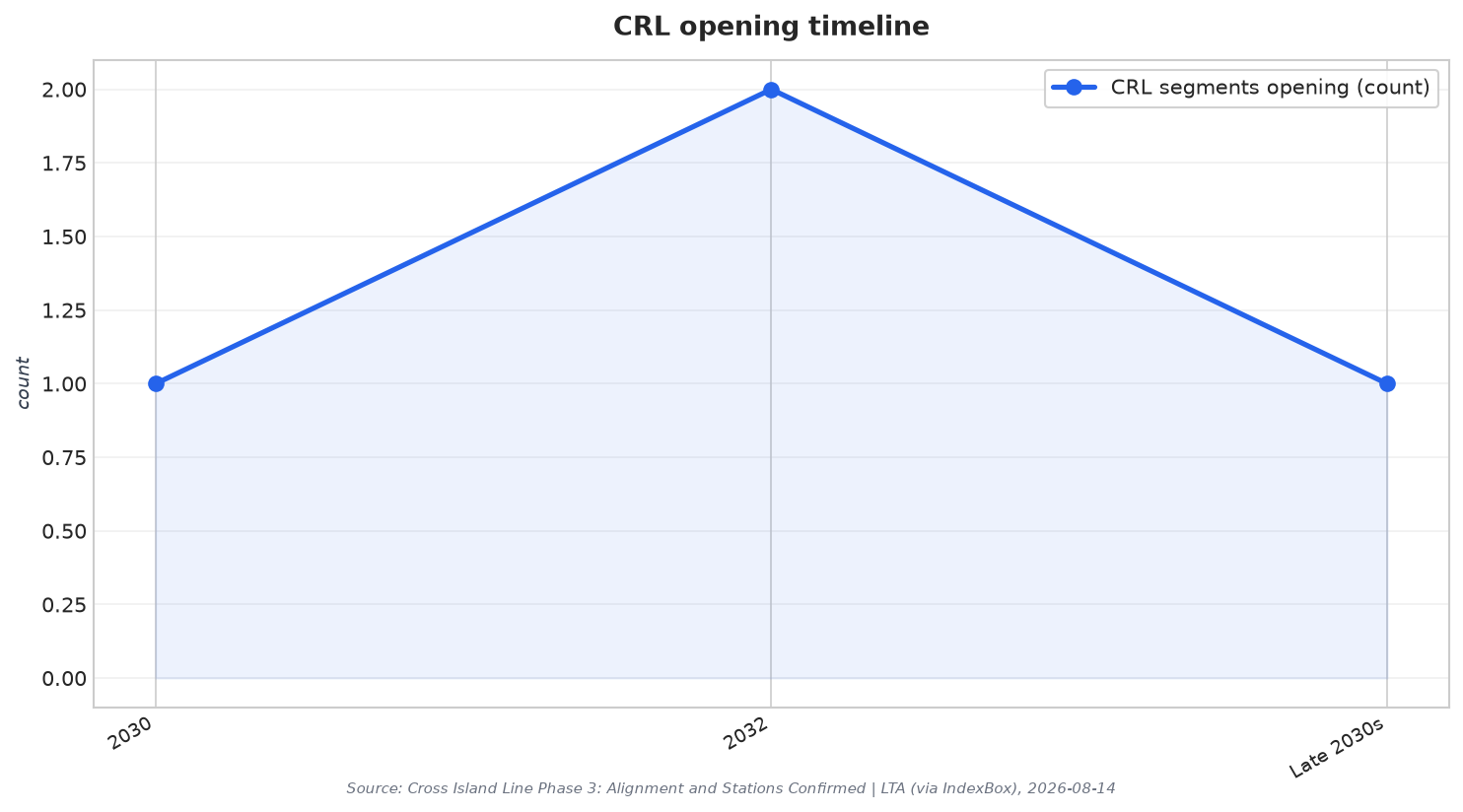
For construction firms, the westward push is not happening in isolation. Phase 1 spans 29 km and 12 stations, and is targeted to open in 2030. Phase 2 adds 15 km and six underground stations and is expected to open in 2032, while the 7 km Punggol Extension with four stations is also slated for 2032. Work is also ongoing for a 6 km extension from CR2 to CR1/TE32 at Changi Airport Terminal 5. With multiple packages running across years, industry commentary has pointed to overlapping procurement cycles that can compress contractor capacity, especially where underground station works “absorb the deepest engineering resources” and rail delivery is filtered by rail-specific safety certifications.
What Phase 3’s Tunnels, Stations, and Depot Signal for Capability
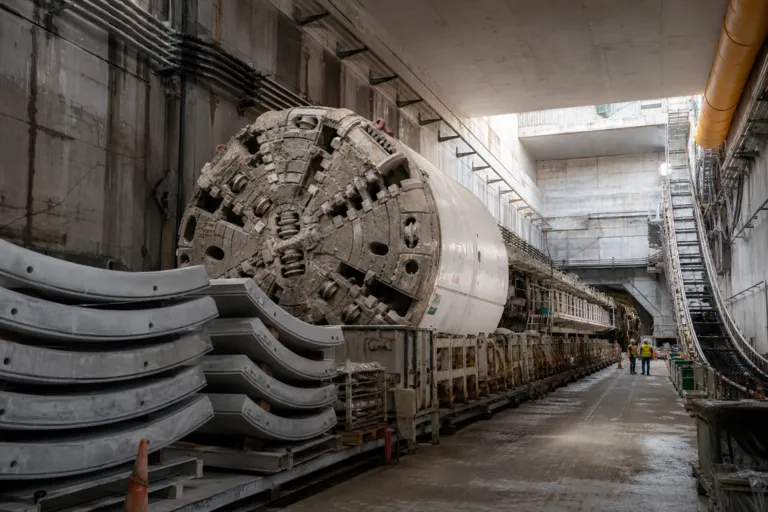
Phase 3’s civil profile also points to why specialist underground expertise may carry a premium. The broader market narrative highlights dependence on specialised tunnel boring machines, noting that geology can drive requirements such as slurry TBMs with limited regional lessor availability. Contractor positioning matters. Market analysis has described Woh Hup Holdings Pte Ltd as leveraging heavy engineering pedigree in complex underground station contracts, Lum Chang Holdings Limited as anchored in integrated design-build rail packages, and Obayashi Singapore Private Limited as differentiating through precision standards applied to tunnel boring operations. A real reference point already exists on CRL: in December 2022, LTA awarded a $758 million contract for the design and construction of bored tunnels between Fairways Drive and Sin Ming Walk to a joint venture between Obayashi Corporation and Shanghai Tunnel Engineering Co (Singapore) Pte Ltd.
Builders also need to view Phase 3 through systems and operations commitments that affect construction interfaces. Rolling stock supply is tied to a June 2023 contract worth S$589 million awarded to a consortium formed by CRRC Qingdao Sifang and Singapore CRRC Sifang Railway Vehicles Service. The agreement covers 44 six-car automated trainsets, with an option for up to 11 more, and notes a design that can be extended to eight cars in the future. LTA has described the trains as fully automated and using a 1.5 kV DC overhead conductor rail system, expected to improve energy efficiency compared with 750 V DC third rail systems used on other lines. These details matter on the ground because they influence depot readiness, testing regimes, and the sequencing between civil, track, and systems works.
Finally, Phase 3 changes the west’s construction map, not just the line diagram. A second CRL depot of about 23 hectares will be built at the former Raffles Country Club site and co-located with a multi-storey bus depot, creating another major node of enabling works and interfaces. LTA has also stated that, once the line is completed, commuters traveling to and from western Singapore could save up to 50 minutes. At the network level, the CRL is planned to be Singapore’s longest fully underground MRT line at around 67 km when completed, projected to carry at least 600,000 passengers per day in its initial years and grow to 1 million in the longer term. For builders, that combination of scale, underground complexity, and overlapping megaproject timelines is the real meaning of the 2027 push.
When is Cross Island Line Phase 3 expected to start construction in Singapore?
How long is Cross Island Line Phase 3 and where does it run?
Which Phase 3 stations will be interchanges?
What does the Singapore Cross Island Line Phase 3 construction 2027 timeline mean for builders’ capacity?
What recent CRL tunnelling contract shows the scale of underground works?